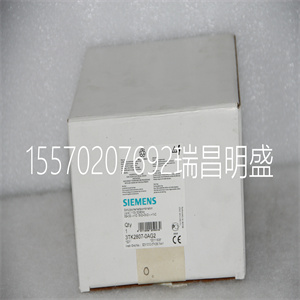


3TK2807-0AG2
Control Builder安装在通常连接到AC 800M的PC中
控制器通过控制网络和控制器上的CN1或CN2端口连接
(参见153页的图53)。
或者,可以通过COM4端口(RS-232C)连接Control Builder
在AC 800M控制器上。使用工具电缆TK212和PC上的串行端口。
在冗余配置中,Control Builder连接到主CPU
COM4端口。备份CPU无法与Control Builder通信。
PM851/PM851A仅限于一个以太网(CN1)端口,因此是冗余的
以太网不可用。
标准控件生成器不支持CI862。如果要使用CI862
必须安装合适的系统扩展。
要使用FF HI功能,请使用升级CI852单元的固件
串行固件升级工具。串行固件升级工具加载
控制器具有FF HI功能的特殊固件。手动浏览
串行固件升级工具中的文件夹…\FirmwareFiles\SC860rFFHI,以及
选择firmware.ext。
3节控制网络的配置连接
3BSE036351-510 A 153
与控制网络的连接
控制网络是实时数据和通用数据的专用IP网络域
工业计算机之间的通信系统。它是可扩展的,从一个非常小的角度来看
具有几个节点的小型网络,到包含多个节点的大型网络
“网络区域”和数百个节点。
图53.连接到控制网络的AC 800M控制器示例
输入/输出
AC 800米
输入/输出
AC 800米
STP
AC 800米
输入/输出
转换
中心
输入/输出
AC 800米
输入/输出
AC 800米
STP
转换
输入/输出
AC 800米
输入/输出
AC 800米
STP
中心
在工业环境中
使用STP电缆,完全控制
布线可用。
仅使用
STP内部
具有
常见的
接地
工业的
环境
非工业
环境
法罗群岛
FO=光纤链路
STP=屏蔽双绞线链路
安装控制器
在橱柜中
控制生成器操作员站
特殊情况下使用STP
一般使用FO
通常使用STP
FO或STP FO或STP,并观察
大限度
电缆长度。
通信可能性3节配置
154 3BSE036351-510 A
网络可以利用不同的和混合的链路实现
以太网和PPP。它提供完全冗余,以实现高网络效率
可利用性
AC 800M控制器始终通过STP连接到控制网络
(屏蔽双绞线)电缆。当地环境应该是工业环境吗
本质上,AC 800M/控制网络连接必须转换为
光纤(FO)电缆。这是通过安装以太网交换机实现的,该交换机具有:
光端口和电端口。参见153页的图53。
有关控制网络的更多信息,请参阅控制网络文档。
通信可能性
处理器单元(PM8XX/TP830或PM891)包含以下内容:
通信端口,提供以下功能:
•CN1和CN2用于连接到控制网络。两者都是RJ45
以太网端口(IEEE802.3)和连接通常通过以下方式实现:
5类屏蔽双绞线电缆(STP 5级)。然而
以前,在工业环境中,建议所有STP
电缆被转换成光纤。
–对于单CPU或冗余CPU和单网络:所有CN1端口均为
连接到网络(可以使用CN2,但需要重新配置
相关CPU的通信设置的一部分)。
–对于单个或冗余CPU和冗余网络:所有CN1端口均为
连接到主网络,所有CN2端口连接到次网络
网络
有关电缆选择、开关等的详细信息,请参见附录C,
推荐的组件。
PM851/PM851A仅限于一个以太网(CN1)端口,因此是冗余的
以太网不可用。
3节配置通信可能性
3BSE036351-510 A 155
•COM3是带有调制解调器信号的RS-232C的RJ45端口。实例
协议为Modbus、西门子3964R、COMLI或定制设计。更多
有关详细信息,请参阅协议特定文档。
•COM4是用于连接维修工具的RJ45端口(参见连接控制
152页上的生成器)。端口没有调制解调器信号。
通过向CEX总线添加通信接口
处理器单元端口可以扩展。可用的CEX总线接口数量
如156页表19所示。
3TK2807-0AG2
3TK2807-0AG2
The Control Builder is installed in a PC that is normally connected to the AC 800M Controller via the Control Network and the CN1 or CN2 ports on the controller (see Figure 53 on page 153). Alternatively, the Control Builder may be connected via the COM4 port (RS-232C) on the AC 800M Controller. Use the tool cable TK212 and a serial port on the PC. In redundant configuration, the Control Builder is connected to the Primary CPU COM4 port. The Backup CPU cannot communicate with Control Builder. PM851/PM851A is restricted to one Ethernet (CN1) port, thus redundant Ethernet is not available. Control Builder as standard does not support CI862. If CI862 is to be used suitable system extension must be installed. To use the FF HI functionality, upgrade the firmware of CI852 unit by using Serial Firmware Upgrade Tool. The Serial Firmware Upgrade Tool loads the special firmware with FF HI functionality to the Controller. Manually browse the folder, ..\FirmwareFiles\SC860rFFHI in the Serial Firmware Upgrade Tool and select firmware.ext. Section 3 Configuration Connection to a Control Network 3BSE036351-510 A 153 Connection to a Control Network Control Network is a private IP network domain for both real time data and general system communication between industrial computers. It is scalable, from a very small network with a few nodes, to a large network containing a number of “Network Areas” and many hundreds of nodes. Figure 53. Example of AC 800M Controllers Connected to a Control Network I/O AC 800M I/O AC 800M STP AC 800M I/O Switch Hub I/O AC 800M I/O AC 800M STP Switch I/O AC 800M I/O AC 800M STP Hub Within industrial environments, only use STP cable where full control of the cabling is available. Use only STP inside areas with common grounding INDUSTRIAL ENVIRONMENT NON-INDUSTRIAL ENVIRONMENT FO FO = Fiber Optic link STP = Shielded Twisted Pair Link Controllers mounted in cabinets Control Builder Operator Station USE STP EXCEPTIONALLY USE FO GENERALLY USE STP GENERALLY FO or STP FO or STP and observe maximum cable length. Communication Possibilities Section 3 Configuration 154 3BSE036351-510 A The network can utilize different and mixed link implementations such as Fast Ethernet and PPP. It provides for full redundancy, in order to achieve high network availability. The AC 800M controller is always connected to the Control Network via an STP (Shielded Twisted Pair) cable. Should the local environment be of an industrial nature, the AC 800M / Control Network connection must be converted over to a Fiber Optic (FO) cable. This is achieved by installing an Ethernet Switch having both optical and electrical ports. See Figure 53 on page 153. For more information on Control Network, see Control Network documentation. Communication Possibilities The processor unit (PM8XX/TP830 or PM891) contains the following communication ports, offering the following functions: • CN1 and CN2 are used for connection to the Control Network. Both are RJ45 ports for Ethernet (IEEE802.3) and connection is normally achieved using category 5 shielded twisted pair cable (STP class 5). However, as mentioned previously, within industrial environments it is recommended that all STP cables are converted to optical fiber. – For single or redundant CPUs and single networks: All CN1 ports are connected to the network (CN2 can be used, but requires reconfiguration of the communication set-up for the concerned CPU). – For single or redundant CPUs and redundant networks: All CN1 ports are connected to the primary network and all CN2 ports to the secondary network. Details on cable selection, switches and so forth, are provided in Appendix C, Recommended Components. PM851/PM851A is restricted to one Ethernet (CN1) port, thus redundant Ethernet is not available. Section 3 Configuration Communication Possibilities 3BSE036351-510 A 155 • COM3 is an RJ45 port for RS-232C with modem signals. Examples of protocols are Modbus, Siemens 3964R, COMLI or custom-design. For more details, see protocol-specific documentation. • COM4 is an RJ45 port for connection of service tools (see Connecting Control Builder on page 152). The port has no modem signals. By adding communication interfaces to the CEX-Bus, the number of protocols and processor unit ports can be expanded. The available CEX-Bus interface quantities are shown in Table 19 on page 156.
Copyright ©2019-2022 瑞昌明盛自动化设备有限公司 版权所有 赣ICP备2021006016号