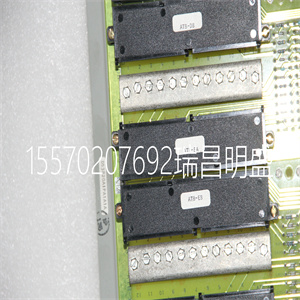
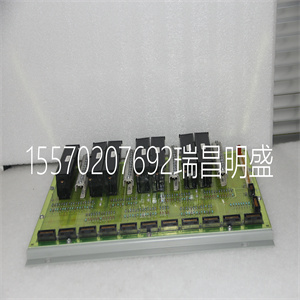
DS3820AIPA1A1A The DMC-18x2 series motion control cards install directly into the PCI bus. This controller series offers many enhanced features including high speed communications, non-volatile program memory, faster encoder speeds, and improved cabling for EMI reduction. The DMC-18x2 provides a high speed FIFO for sending and receiving commands. This PCI bus motion controller allows for high speed servo control up to 12 million encoder counts/sec and step motor control up to 3 million steps per second. Sample rates as low as 62.5μsec per axis are available. A 2 meg Flash EEPROM provides non-volatile memory for storing application programs, parameters, arrays and firmware. New firmware revisions are easily upgraded in the field without removing the controller from the PC. The DMC-18x2 is available with up to four axes on a single PCI card. The DMC-1812, 1822, 1832, and 1842, one thru four axes controllers, are on a single 4.23” x 9” card. Designed to solve complex motion problems, the DMC-18x2 can be used for applications involving jogging, point-to-point positioning, vector positioning, electronic gearing, multiple move sequences, and contouring. The controller eliminates jerk with programmable acceleration, deceleration, and profile smoothing. For seamless following of complex contours, the DMC-18x2 provides continuous vector feed of an infinite number of linear and arc segments. The controller also features electronic gearing with multiple master axes as well as gantry mode operation. For synchronization with outside events, the DMC-18x2 provides uncommitted I/O, including 8 digital inputs, and 8 digital outputs. Committed digital inputs are provided for forward and reverse limits, abort, home, and definable input interrupts. Commands can be sent in either Binary or ASCII. Additional software is available to autotune, view trajectories on a PC screen, translate CAD.DXF files into motion, and create powerful, application-specific operator interfaces with Visual Basic, Labview and others. Drivers for DOS, Windows 3.1, 95, 98, 98SE, ME, NT4.0, 2000, XP, QNX, and Linux are available. Overview of Motor Types The DMC-18x2 can provide the following types of motor control: 1. Standard servo motors with +/- 10 volt or PWM command signals 2. Brushless servo motors with sinusoidal commutation 3. Step motors with step and direction signals 4. Other actuators such as hydraulics - For more information, contact Galil. The user can configure each axis for any combination of motor types, providing maximum flexibility. Artisan Technology Group - Quality Instrumentation ... Guaranteed | (888) 88-SOURCE | www.artisantg.com 2 ● Chapter 1 Overview DMC-18x2 Standard Servo Motors with +/- 10 Volt Command Signal The DMC-18x2 achieves superior precision through use of a 16-bit motor command output DAC and a sophisticated PID filter that features velocity and acceleration feedforward, an extra pole filter and integration limits. The controller is configured by the factory for standard servo motor operation. In this configuration, the controller provides an analog signal (+/- 10Volt) to connect to a servo amplifier. This connection is described in Chapter 2. Brushless Servo Motor with Sinusoidal Commutation The DMC-18x2 can provide sinusoidal commutation for brushless motors (BLM). In this configuration, the controller generates two sinusoidal signals for connection with amplifiers specifically designed for this purpose. Note: The task of generating sinusoidal commutation may be accomplished in the brushless motor amplifier. If the amplifier generates the sinusoidal commutation signals, only a single command signal is required and the controller should be configured for a standard servo motor (described above). Sinusoidal commutation in the controller can be used with linear and rotary BLMs. However, the motor velocity should be limited such that a magnetic cycle lasts at least 6 milliseconds*. For faster motors, please contact the factory. The controller provides a one-time, automatic set-up procedure. The parameters determined by this procedure can then be saved in non-volatile memory to be used whenever the system is powered on. The DMC-18x2 can control BLMs equipped with Hall sensors as well as without Hall sensors. If hall sensors are available, once the controller has been setup, the controller will estimate the commutation phase upon reset. This allows the motor to function immediately upon power up. The hall effect sensors also provide a method for setting the precise commutation phase. Chapter 2 describes the proper connection and procedure for using sinusoidal commutation of brushless motors. * 6 Milliseconds per magnetic cycle assumes a servo update of 1 msec (default rate). Stepper Motor with Step and Direction Signals The DMC-18x2 can control stepper motors. In this mode, the controller provides two signals to connect to the stepper motor: Step and Direction. For stepper motor operation, the controller does not require an encoder and operates the stepper motor in an open loop. Chapter 2 describes the proper connection and procedure for using stepper motors. DMC-18x2 Functional Elements The DMC-18x2 circuitry can be divided into the following functional groups as shown in Figure 1.1 and discussed below. Artisan Technology Group - Quality Instrumentation ... Guaranteed | (888) 88-SOURCE | www.artisantg.com DMC-18x2 Chapter 1 Overview • 3 WATCHDOG TIMER 68331 MICROCOMPUTER WITH 2 Meg RAM 2 MegFLASH EEPROM HIGH-SPEED MOTOR/ENCODER INTERFACE FOR X,Y,Z,W I/O INTERFACE Primary FIFOS PLUG & PLAY INTERRUPTS PCI BUS HIGH-SPEED LATCH FOR EACH AXIS 8 PROGRAMMABLE, TTL INPUTS 8 PROGRAMMABLE OUTPUTS TTL LIMITS AND HOME INPUTS MAIN ENCODERS +/- 10 VOLT OUTPUT FOR SERVO MOTORS PULSE/DIRECTION OUTPUT FOR STEP MOTORS HIGH SPEED ENCODER COMPARE OUTPUT Figure 1.1 - DMC-18x2 Functional Elements Microcomputer Section The main processing unit of the DMC-18x2 is a specialized 32-bit Motorola 68331 Series Microcomputer with 2 Meg RAM and 2 Meg Flash EEPROM. The RAM provides memory for variables, array elements and application programs. The flash EEPROM provides non-volatile storage of variables, programs, and arrays. It also contains the DMC-18x2 firmware. Motor Interface Galil’s GL-1800 custom, sub-micron gate array performs quadrature decoding of each encoder at up to 12 MHz. For standard servo operation, the controller generates a +/-10 Volt analog signal (16 Bit DAC). For sinusoidal commutation operation, the controller uses 2 DACs to generate 2 +/-10Volt analog signals. For stepper motor operation, the controller generates a step and directio |