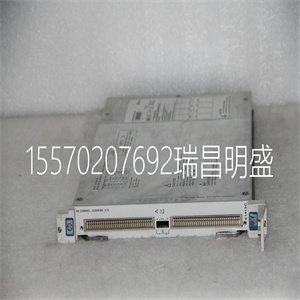
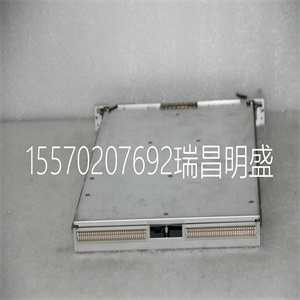

E1413C
DMC-1812、1822、1832或DMC-1842运动控制器,(1)100针电缆和(1)
互连模块(ICM/AMP-1900或ICM-2900)。
2.带光学编码器的伺服电机(每轴一个)或步进电机。
3.功率放大器。
4.放大器电源。
5.PC(个人计算机-PCI总线)。
6.通信软件——DMCTERM、DMCWIN32或WSDK32(在Galil软件上)
CD或下载http://www.galilmc.com/support/download.html).
电机可以是伺服(刷式或无刷)或步进电机。放大器应适用于:
并且可以是线性或脉宽调制的。放大器可以具有电流反馈,
电压反馈或速度反馈。
对于电流模式下的伺服电机,放大器应接受+/-10伏范围内的模拟信号
作为命令。放大器增益应设置为+10V命令将产生增益
所需的大电流。例如,如果峰值电机电流为10A,则放大器增益应为:
为1A/V。对于速度模式放大器,10伏的命令信号应以相同的速度运行电机
大所需速度。设置速度增益,以使10V的输入信号以大速度运行电机
大所需速度。
对于步进电机,放大器应接受步进和方向信号。为了启动步进电机
系统参考第20页的“连接步进电机”。
强烈建议次使用DMC-18x2的用户使用WSDK软件。它为系统设置、调整和分析提供逐步说明。
安装DMC-18x2
完整、可运行的DMC-18x2系统的安装包括9个步骤。
步骤1.确定整个电机配置。
步骤2.在DMC-18x2上安装跳线。
步骤3.安装通信软件。
步骤4.在PC中安装DMC-18x2。
步骤5.与Galil通信软件建立通信。
步骤6.确定用于正弦换向的轴。
步骤7.连接放大器和编码器。
步骤8a。连接标准伺服电机。
步骤8b。连接正弦换向电机。
Artisan技术集团-质量仪器…保证|(888)88-SOURCE| www.artistg.com
DMC-18x2第2章入门•9
步骤8c。连接步进电机。
步骤9.调整伺服系统。
步骤1.确定整个电机配置
在设置运动控制系统之前,用户必须确定所需的电机配置。
DMC-18x2可以控制正弦换向的标准伺服电机的任何组合
无刷电机和步进电机。也可以使用其他类型的致动器,例如液压装置
受控制,请咨询Galil。
以下配置信息是确定正确电机配置所必需的:
标准伺服电机操作:
DMC-18x2由工厂设置,用于标准伺服电机操作,提供模拟信号
+/-10V的指令信号。标准伺服系统不需要硬件或软件配置
电机运行。
正弦换向:
正弦换向通过单个软件命令BA进行配置。这种配置
使控制器重新配置可用控制轴的数量。
每个正弦换向电机需要两个DAC。在标准伺服操作中
每个轴有一个DAC。为了具有用于正弦换向的附加DAC
必须为每个正弦换向轴指定一个附加轴。例如
为了控制两个标准伺服轴和一个正弦换向轴,控制器需要
总共四个DAC,控制器必须是DMC-1842。
正弦换向由命令BA配置。例如,BAX将X轴设置为
正弦换向。正弦信号的第二个DAC将是可用的高DAC
控制器上的DAC。例如:使用DMC-1842,命令BAX将配置X
轴是主正弦信号,“W”轴是第二正弦信号。
BA命令还重新配置控制器,以指示控制器的轴少一个
每个正弦换向轴的“标准”控制。例如如果命令BAX是
给定DMC-1842控制器,控制器将重新配置为DMC-1832控制器。通过
根据定义,DMC-1832控制3个轴:X、Y和Z。自
输出DAC用于正弦换向。
步骤6中讨论了正弦换向连接的进一步说明。
步进电机操作:
为了将DMC-18x2配置为步进电机运行,控制器需要为每台电机配备一根跳线
必须给出步进电机和命令MT。步进电机跳线的安装是:
在以下标题为“在DMC-18x2上安装跳线”的章节中进行了讨论。进一步的
中讨论了步进电机连接说明
E1413C
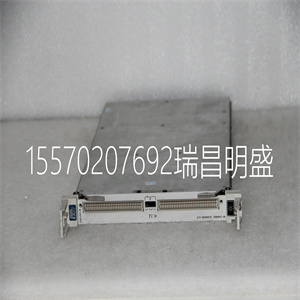
E1413C
DMC-1812, 1822, 1832, or DMC-1842 Motion Controller, (1) 100-pin cable, and (1) interconnect module (either ICM/AMP-1900 or ICM-2900). 2. Servo Motors with Optical Encoder (one per axis) or Stepper Motors. 3. Power Amplifiers. 4. Power Supply for Amplifiers. 5. PC (Personal Computer - PCI bus). 6. Communications Software – DMCTERM, DMCWIN32, or WSDK32 (On Galil Software CD, or download at http://www.galilmc.com/support/download.html). The motors may be servo (brush type or brushless) or steppers. The amplifiers should be suitable for the motor and may be linear or pulse-width-modulated. An amplifier may have current feedback, voltage feedback or velocity feedback. For servo motors in current mode, the amplifiers should accept an analog signal in the +/-10 Volt range as a command. The amplifier gain should be set such that a +10V command will generate the maximum required current. For example, if the peak motor current is 10A, the amplifier gain should be 1 A/V. For velocity mode amplifiers, a command signal of 10 Volts should run the motor at the maximum required speed. Set the velocity gain so that an input signal of 10V, runs the motor at the maximum required speed. For step motors, the amplifiers should accept step and direction signals. For start-up of a step motor system refer to “Connecting Step Motors” on page 20. The WSDK software is highly recommended for first time users of the DMC-18x2. It provides stepby-step instructions for system setup, tuning and analysis. Installing the DMC-18x2 Installation of a complete, operational DMC-18x2 system consists of 9 steps. Step 1. Determine overall motor configuration. Step 2. Install Jumpers on the DMC-18x2. Step 3. Install the communications software. Step 4. Install the DMC-18x2 in the PC. Step 5. Establish communications with the Galil communication software. Step 6. Determine the axes to be used for sinusoidal commutation. Step 7. Make connections to amplifier and encoder. Step 8a. Connect standard servo motors. Step 8b. Connect sinusoidal commutation motors. Artisan Technology Group - Quality Instrumentation ... Guaranteed | (888) 88-SOURCE | www.artisantg.com DMC-18x2 Chapter 2 Getting Started • 9 Step 8c. Connect step motors. Step 9. Tune the servo system. Step 1. Determine Overall Motor Configuration Before setting up the motion control system, the user must determine the desired motor configuration. The DMC-18x2 can control any combination of standard servo motors, sinusoidally commutated brushless motors, and stepper motors. Other types of actuators, such as hydraulics can also be controlled, please consult Galil. The following configuration information is necessary to determine the proper motor configuration: Standard Servo Motor Operation: The DMC-18x2 has been setup by the factory for standard servo motor operation providing an analog command signal of +/- 10V. No hardware or software configuration is required for standard servo motor operation. Sinusoidal Commutation: Sinusoidal commutation is configured through a single software command, BA. This configuration causes the controller to reconfigure the number of available control axes. Each sinusoidally commutated motor requires two DAC's. In standard servo operation, the DMC-18x2 has one DAC per axis. In order to have the additional DAC for sinusoidal commutation, the controller must be designated as having one additional axis for each sinusoidal commutation axis. For example, to control two standard servo axes and one axis of sinusoidal commutation, the controller will require a total of four DAC's and the controller must be a DMC-1842. Sinusoidal commutation is configured with the command, BA. For example, BAX sets the X axis to be sinusoidally commutated. The second DAC for the sinusoidal signal will be the highest available DAC on the controller. For example: Using a DMC-1842, the command BAX will configure the X axis to be the main sinusoidal signal and the 'W' axis to be the second sinusoidal signal. The BA command also reconfigures the controller to indicate that the controller has one less axis of 'standard' control for each axis of sinusoidal commutation. For example, if the command BAX is given to a DMC-1842 controller, the controller will be re-configured to a DMC-1832 controller. By definition, a DMC-1832 controls 3 axes: X, Y and Z. The 'W' axis is no longer available since the output DAC is being used for sinusoidal commutation. Further instruction for sinusoidal commutation connections are discussed in Step 6. Stepper Motor Operation: To configure the DMC-18x2 for stepper motor operation, the controller requires a jumper for each stepper motor and the command, MT, must be given. The installation of the stepper motor jumper is discussed in the following section entitled "Installing Jumpers on the DMC-18x2". Further instructions for stepper motor connections are discussed in
Copyright ©2019-2022 瑞昌明盛自动化设备有限公司 版权所有 赣ICP备2021006016号