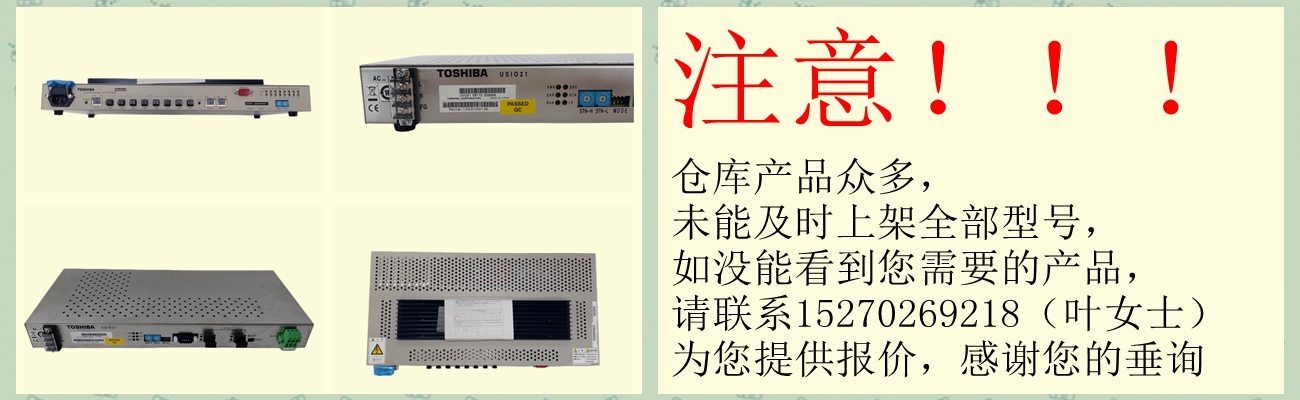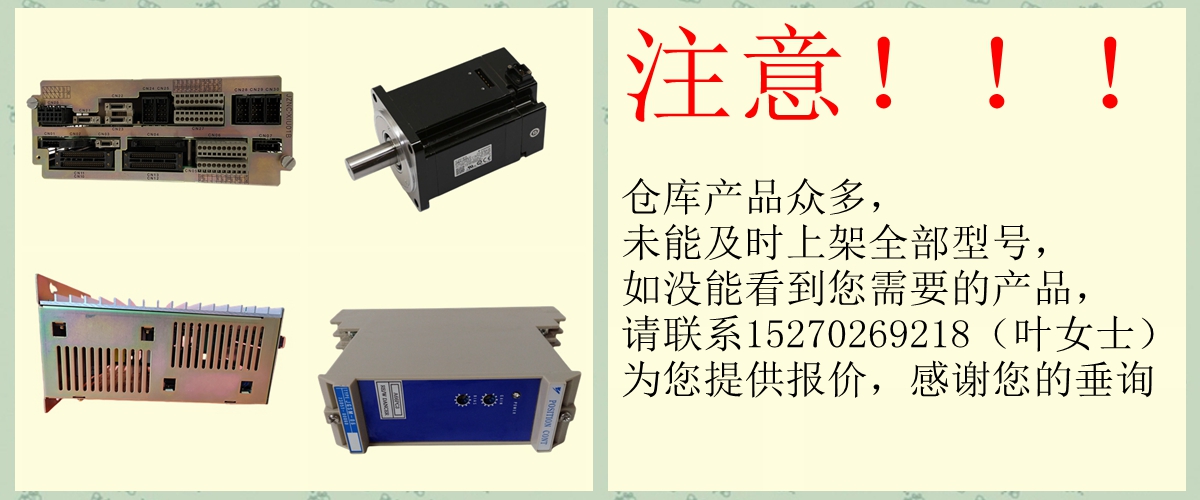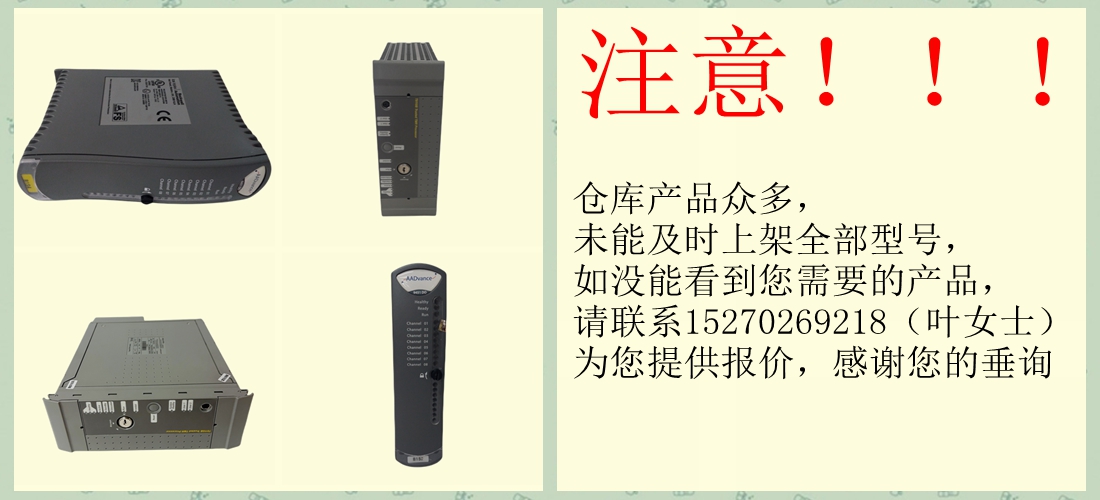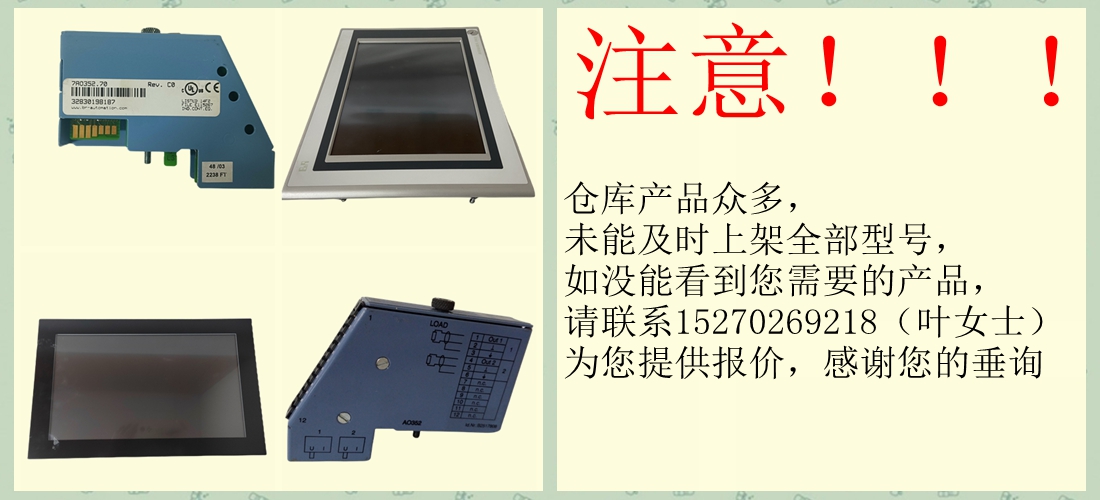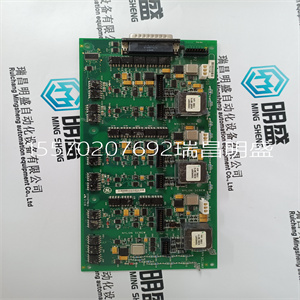
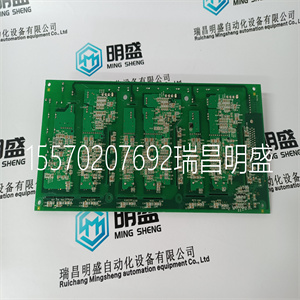
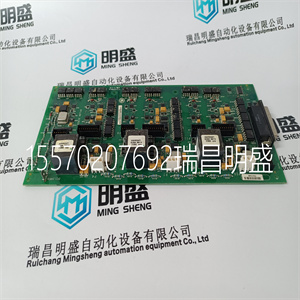
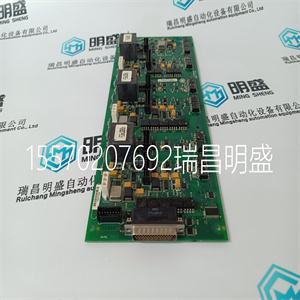
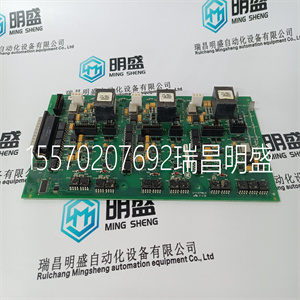


IS210AEBIH3BEC
现场终端单元(FTU)是输入/输出模块的一部分,用于:
将所有三个FIU连接到单个现场设备。工联会主要包括:
前端信号调节、现场信号所需的无源元件
以及EMI/RFI滤波。当安装在可信环境中时
FTU现场连接器与控制器或扩展器机箱互连
连接在机箱后部的I/O电缆组件。
SmartSlot链路从HIU通过
工联会。这些信号直接传送到I/O电缆组件并进行维护
与FTU上的I/O信号隔离。SmartSlot链接是智能的
活动和备用模块之间的连接,以便在运行期间进行协调
模块更换。
现场接口单元(FIU)是模块中包含
与特定类型的现场I/O接口所需的特定电路
信号。每个模块有三个FIU,每个片一个。对于TMR 24 Vdc数字电路
在输入模块中,FIU包含一个单独的模数(A/D)转换器
对于40个字段输入中的每一个。
FIU从HIU接收隔离电源,用于逻辑。金融情报室提供:
为系统所需的工作电压提供额外的功率调节
FIU电路。一个隔离的6.25 Mbit/s串行链路将每个FIU连接到以下位置之一:
HIU切片。
金融情报室还测量一系列机载“内务”信号,以提供帮助
用于监测模块的性能和操作条件。
这些信号包括电源电压、电流消耗和车载信号
参考电压和电路板温度。
现场终端装置(FTU)
现场接口单元(FIU)
2章说明
14罗克韦尔自动化出版物ICSTT-RM271Q-EN-P-2021 8月
HIU是模块的模块间总线(IMB)的接入点。
它还提供配电和本地可编程处理
权力HIU是I/O模块中直接连接到的部分
IMB背板。HIU是受信任的I/O类型所共有的,并且具有以下类型:
相关和产品范围通用功能。每个HIU包含三个
独立切片,通常称为A、B和C。
三个片之间的所有互连包括隔离,以防止
切片之间的任何故障交互。每个切片都被视为故障
安全壳区域(FCR),作为一个层面上的断层,对整个断层没有影响
其他切片的操作。
HIU提供中的模块共有的以下服务:
家庭:
•与TMR处理器的高速容错通信
通过IMB接口。
•片间FCR互连总线,用于投票输入IMB数据,以及
将输出I/O模块数据分发到IMB。
•FIU切片的光学隔离串行数据接口。
•双24 Vdc机箱电源电压的冗余电源共享,以及
HIU电路逻辑电源的功率调节。
•FIU片的磁隔离电源。
•模块状态指示灯的FPU串行数据接口。
•用于协调的主备模块之间的SmartSlot链接
在模块更换期间。
•数字信号处理,以执行本地数据缩减和自诊断。
•用于存储模块操作、配置和数据的本地内存资源,
以及字段I/O数据。
•车载内务管理,监控参考电压、电流
消耗和板温度。
前面板单元(FPU)包括前面板终端单元(FPTU)
以及前面板显示单元(FPDU)。整个FPU包含:
前面板所需的连接器、开关、逻辑和LED指示灯。
对于每种类型的可信I/O模块,
主/备用和指示灯(LED)以及模块拆卸
开关。额外的双色LED为个人提供状态指示
I/O信号。串行数据接口将FPU连接到每个HIU片,以:
控制LED状态指示灯并监控模块拆卸开关。
模块通过比较确定触点状态和线路故障状态
输入电压电平为四个用户编程阈值和两个固定阈值
(小和大)阈值。选择“接触不确定”区域
在触点闭合和打开状态之间定义,以考虑边缘
主机接口单元(HIU)
前面板单元(FPU)
在线监测阈值
2章说明
罗克韦尔自动化出版物ICSTT-RM271Q-EN-P-2021 8月15日
外部接线或FIU中存在故障。磁滞被提供在电极上
通过对应于阈值的上尺度值和下尺度值来确定阈值
用于分别增大和减小值。
表1:阈值数据示例
提示:返回的通道状态值取决于以前的状态值。如果输入电平为
增加,则返回较低的状态值。如果输入电平降低
将返回状态值。
当模块被插入到被监控线路中的备用插槽中时
应用程序,然后字段终止
IS210AEBIH3BEC
IS210AEBIH3BEC
The Field Termination Unit (FTU) is the section of the I/O Module that connects all three FIUs to a single field device. The FTU primarily contains passive components necessary for front-end signal conditioning, field signal overvoltage protection, and EMI/RFI filtering. When installed in a Trusted Controller or Expander Chassis, the FTU field connector interconnects to the I/O cable assembly attached at the rear of the Chassis. The SmartSlot link is passed from the HIU to the field connections via the FTU. These signals go directly to the I/O cable assembly and maintain isolation from the I/O signals on the FTU. The SmartSlot link is the intelligent connection between Active and Standby Modules for coordination during Module replacement. The Field Interface Unit (FIU) is the section of the Module that contains the specific circuits necessary to interface to the particular types of field I/O signals. Each Module has three FIUs, one per slice. For the TMR 24 Vdc Digital Input Module, the FIU contains an individual analog to digital (A/D) converter for each of the 40 field inputs. The FIU receives isolated power from the HIU for logic. The FIU provides additional power conditioning for the operational voltages required by the FIU circuitry. An isolated 6.25 Mbit/s serial link connects each FIU to one of the HIU slices. The FIU also measures a range of onboard “housekeeping” signals that assist in monitoring the performance and operating conditions of the Module. These signals include power supply voltages, current consumption, onboard reference voltages and board temperature. Field Termination Unit (FTU) Field Interface Unit (FIU) Chapter 2 Description 14 Rockwell Automation Publication ICSTT-RM271Q-EN-P - August 2021 The HIU is the point of access to the Inter Module Bus (IMB) for the Module. It also provides power distribution and local programmable processing power. The HIU is the only section of the I/O Module to directly connect to the IMB Backplane. The HIU is common to most Trusted I/O types and has type dependent and product range common functions. Each HIU contains three independent slices, commonly referred to as A, B, and C. All interconnections between the three slices incorporate isolation to prevent any fault interaction between the slices. Each slice is considered a Fault Containment Region (FCR), as a fault on one slice has no effect on the operation of the other slices. The HIU provides the following services common to the modules in the family: • High Speed Fault Tolerant Communications with the TMR Processor via the IMB interface. • FCR Interconnect Bus between slices to vote incoming IMB data and distribute outgoing I/O Module data to the IMB. • Optically isolated serial data interface to the FIU slices. • Redundant power sharing of dual 24 Vdc chassis supply voltage and power regulation for logic power to HIU circuitry. • Magnetically isolated power to the FIU slices. • Serial data interface to the FPU for Module status LEDs. • SmartSlot link between active and standby modules for coordination during Module replacement. • Digital Signal Processing to perform local data reduction and selfdiagnostics. • Local memory resources for storing Module operation, configuration, and field I/O data. • Onboard housekeeping, which monitors reference voltages, current consumption and board temperature. The Front Panel Unit (FPU) comprises a Front Panel Termination Unit (FPTU) and a Front Panel Display Unit (FPDU). The overall FPU contains the necessary connectors, switches, logic, and LED indicators for the Front Panel. For every type of Trusted I/O Module, the FPU contains the Slice Healthy, Active/Standby and Educated indicators (LEDs), and the module removal switches. Additional bicolor LEDs provide status indication for the individual I/O signals. Serial data interfaces connect the FPU to each of the HIU slices to control the LED status indicators and monitor the module removal switches. The Module determines the contact state and line fault status by comparing the input voltage level to four user programmed thresholds and two fixed (minimum and maximum) thresholds. A "Contact Indeterminate" region is defined between the contact Closed and Open states to account for marginal Host Interface Unit (HIU) Front Panel Unit (FPU) Line Monitoring Thresholds Chapter 2 Description Rockwell Automation Publication ICSTT-RM271Q-EN-P - August 2021 15 faults in the external wiring or in the FIU. Hysteresis is provided on the thresholds by upscale and downscale values, corresponding to the thresholds for increasing and decreasing values respectively. Table 1 Example Threshold Data Tip: The channel state value returned is dependent on the previous state value. If the input level is increasing, then the lower state value will be returned. If the input level is decreasing, the higher state value will be returned. When a Module is inserted into the standby slot in a line-monitored application, then the field terminations for all the input channels are paralleled, resulting in a drop in the input voltages for the Active Module. Therefore the recommended components for line monitoring are zener Chapter 2 Description 16 Rockwell Automation Publication ICSTT-RM271Q-EN-P - August 2021 diodes, one in parallel with the field switch that is across the supply and signal, the other in series with the signal. The Module biases each input channel by means of a 5 kΩ (typical for 24 Vdc digital inputs) termination resistor to the 0 V reference of the module input circuitry. In the absence of any line fault, the zener diodes used for line monitoring purposes form a voltage divider with this termination resistor in the Module. Typically, the values are chosen so that the open contact voltage at the input terminal is about 1/3 of the field supply; with the user contact closed the voltage is about 2/3 of the field supply, illustrated in the previous threshold table, default threshold values used for non-line monitored inputs are as follows (in raw units): Default = -4096, -2305, -1971, 3046, 3072, 7168, 8192, 14848, 15872, 19456 The Input Module automatically performs local measurements of several onboard signals that can be used for detailed faul
Copyright ©2019-2022 瑞昌明盛自动化设备有限公司 版权所有 赣ICP备2021006016号