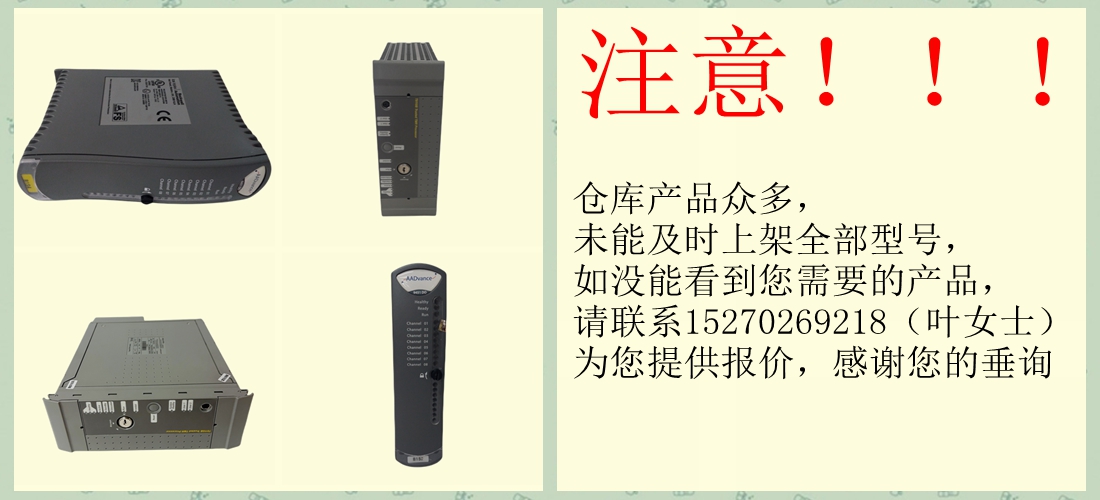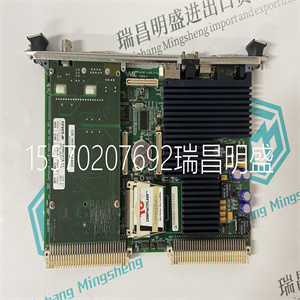
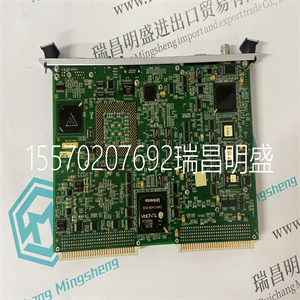
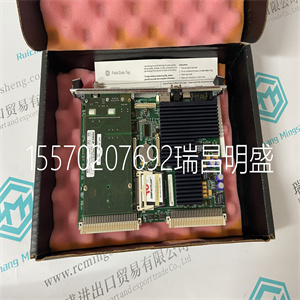
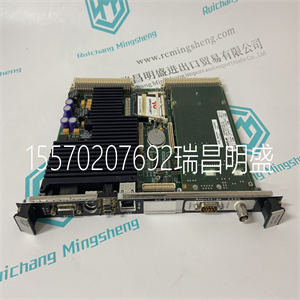
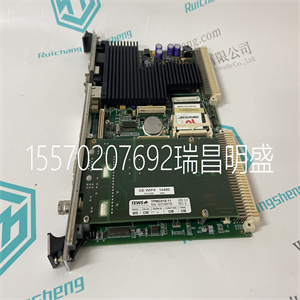


IS215UCVEM09A
前面板单元(FPU)包含必要的连接器、开关、逻辑和LED
前面板的指示灯。对于每种类型的可信I/O模块,FPU都包含
切片正常、主/备用、LED指示灯和模块卸下
开关。附加的双色LED为各个I/O信号提供状态指示。
串行数据接口将FPU连接到每个HIU片,以控制LED状态
指示灯和监控模块拆卸开关。
1.5.线路监测和输出状态
该模块自动监测输出通道电流和电压,以确定:
输出通道的状态。数值输出状态和线路故障状态为:
报告给应用程序,如下所示。
数字描述
输出状态
线路故障
地位
磁场短路5 1
输出通电(On)4 0
空载,磁场断路3 1
输出断电(关闭)2 0
无磁场电源电压1
表1线路监测故障状态
建议在未使用的输出端安装一个虚拟负载电阻器,以便提取电流
超过空载阈值。这将有助于防止模块发出故障信号
空载故障。
1.6.客房服务
输出模块自动执行多个车载信号的本地测量
可用于模块操作的详细故障排除和验证
特点。在每个切片的HIU和FIU内进行测量。
1.7.故障检测/测试
广泛的诊断功能可自动检测模块故障。TMR
输出模块的体系结构和执行的诊断验证了所有参数的有效性
关键电路。使用TMR架构提供了一种容错方法
可信TMR 24Vdc数字输出模块–40信道1.说明
罗克韦尔自动化出版物ICSTT-RM280N-EN-P14期7
模块上一次出现故障,并继续正常输出控制,无故障
系统或过程中的中断。故障通过健康网络报告给用户
模块前面板上的状态指示灯,并通过信息报告给
TMR处理器。在正常操作下,所有三个健康指示灯均为绿色。当
如果发生故障,其中一个健康指示灯将闪烁红色。建议:
调查情况,如果原因在模块内,则应予以更换。
模块更换活动取决于所选备用模块配置的类型
当系统被配置和安装时。该模块可以配置有
专用配套插槽或带有备用更换模块的SmartSlot。
从IMB到现场连接器,I/O模块包含广泛的故障检测和诊断功能
完整性测试。作为输出设备,大多数测试在非干扰模式下进行。
从IMB输入的数据存储在每个片部分的冗余纠错RAM中
HIU的一部分。每个切片对接收到的数据进行投票。所有数据传输包括
来自接收器的确认响应。
TMR处理器周期性地命令车载数字信号处理器(DSP)执行以下操作:
执行安全层测试(SLT)。SLT导致DSP通过TMR进行验证
处理器能够完整地处理数据。此外,DSP使用循环
冗余校验(CRC),用于验证存储在闪存中的变量和配置。
HIU和FIU之间是一系列用于da的电流隔离链路
IS215UCVEM09A
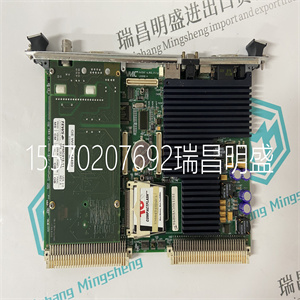
IS215UCVEM09A
The Front Panel Unit (FPU) contains the necessary connectors, switches, logic, and LED indicators for the Front Panel. For every type of Trusted I/O Module, the FPU contains the Slice Healthy, Active/Standby, the Educated LED indicators, and the Module removal switches. Additional bi-colour LEDs provide status indication for the individual I/O signals. Serial data interfaces connect the FPU to each of the HIU slices to control the LED status indicators and monitor the Module removal switches. 1.5. Line Monitoring and Output States The Module automatically monitors the output channel current and voltage to determine the state of the output channel. The numerical output state and line fault status are reported back to the application and are represented below. Description Numerical Output State Line Fault Status Field Short Circuit 5 1 Output Energised (On) 4 0 No Load, Field Open Circuit 3 1 Output De-energised (Off) 2 0 No Field Supply Voltage 1 1 Table 1 Line Monitoring Fault Status It is recommended to fit a dummy load resistor to unused outputs so that a current is drawn that exceeds the NO-LOAD threshold. This will help prevent the Module from signaling a NO-LOAD fault. 1.6. Housekeeping The Output Module automatically performs local measurements of several on-board signals that can be used for detailed troubleshooting and verification of Module operating characteristics. Measurements are made within each slice’s HIU and FIU. 1.7. Fault Detection/Testing Extensive diagnostics provide the automatic detection of Module faults. The TMR architecture of the Output Module and the diagnostics performed verify the validity of all critical circuits. Using the TMR architecture provides a Fault Tolerant method to withstand Trusted TMR 24Vdc Digital Output Module – 40 Channel 1. Description Rockwell Automation Publication ICSTT-RM280N-EN-P Issue 14 7 the first fault occurrence on the Module and continue normal output controls without interruption in the system or process. Faults are reported to the user through the Healthy status indicators on the Front Panel of the Module and through the information reported to the TMR Processor. Under normal operations all three Healthy indicators are green. When a fault occurs, one of the Healthy indicators will be flashing red. It is recommended that this condition is investigated and if the cause is within the Module, it should be replaced. Module replacement activities depend on the type of spare Module configuration chosen when the system was configured and installed. The Module may be configured with a dedicated Companion Slot or with a SmartSlot for a spare replacement Module. From the IMB to the field connector, the I/O Module contains extensive fault detection and integrity testing. As an output device, most testing is performed in a non-interfering mode. Data input from the IMB is stored in redundant error-correcting RAM on each slice portion of the HIU. Received data is voted on by each slice. All data transmissions include a confirmation response from the receiver. Periodically, the TMR Processor commands the on-board Digital Signal Processors (DSPs) to perform a Safety Layer Test (SLT). The SLT results in the DSP verifying with the TMR Processor its ability to process data with integrity. In addition, the DSP uses Cyclical Redundancy Checks (CRC) to verify the variables and configuration stored in Flash memory. Between the HIU and FIU are a series of galvanically isolated links for da
Copyright ©2019-2022 瑞昌明盛自动化设备有限公司 版权所有 赣ICP备2021006016号