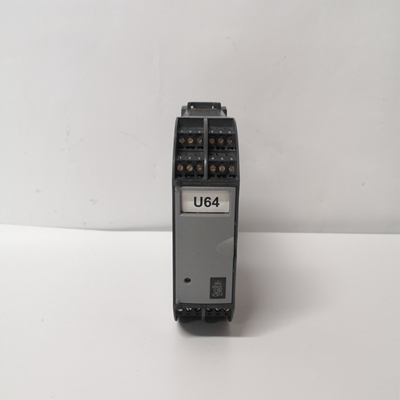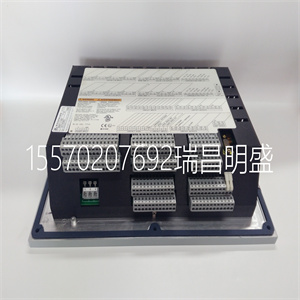
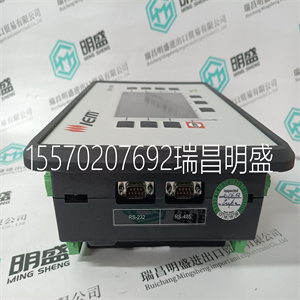
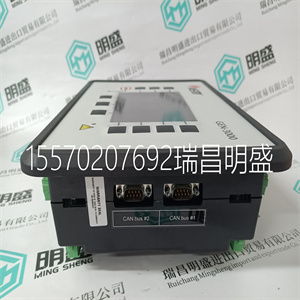
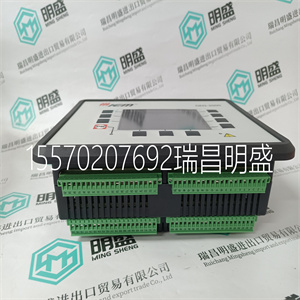


Woodward 5437-076
•符合当地安全标准的隔离装置,如开关或断路器,必须安装在终设备上
安装它必须安装在操作员容易触及的仪器附近,并且必须清楚标记
作为仪器的断开装置。
•尽管某些仪表配备了内部保险丝保护,但应配备适当额定值的外部保护装置,例如3A保险丝
或微型断路器(m.c.b.),也必须由安装人员安装。
•在接入之前,切断电源、继电器和任何通电控制电路的所有电源以及高共模电压
或进行任何连接。
•必须连接电源接地(地),以确保人员安全,减少RFI的影响
干扰和电源干扰滤波器的正确操作。
•电源接地(地)必须连接到接线盒外壳上的接地(接地)螺柱–见图2.3。
•使用适合负载电流的电缆。端子可接受高达14AWG(2.5mm2)的电缆
).
•仪器符合电源输入绝缘等级III。所有其他输入和输出符合等级II。
•二次电路的所有连接必须具有基本绝缘。
•安装后,不得接触带电部件,例如端子。
•外部电路的端子仅用于无可触及带电部件的设备。
•继电器触点无电压,必须与电源和报警器适当串联/
它们要驱动的控制装置。确保未超过触点额定值。有关继电器,请参阅第2.8节
继电器用于切换负载时的触点保护细节。
•不要超过所选模拟输出范围的大负载规格。
模拟输出是隔离的,因此如果连接到隔离输出,则–ve端子必须接地(接地)
另一设备的输入。
•如果仪器未按公司规定的方式使用,则可使用设备提供的保护
受损。
•连接到仪器终端的所有设备必须符合当地安全标准(IEC 60950、EN61010-1)。
笔记。
•接地(接地)-接线端子安装在接线盒外壳上,用于母线接地(地)连接-见图2.3。
•始终将信号输出和干线传输/继电器电缆分开布线,好在接地(接地)金属导管中。使用
双绞线输出引线或屏蔽电缆,屏幕连接至外壳接地(接地)螺柱。
确保电缆通过靠近适当螺钉端子的密封套进入分析仪,并且是短电缆和短电缆
直接的不要将多余的电缆塞入接线盒。
•确保在使用电缆密封套、导管配件和盲塞/塞子(M20)时,IP65等级不受影响
孔)。M20密封套可容纳直径在5至9mm(0.2至0.35 in.)之间的电缆。
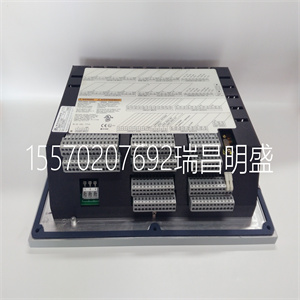
Woodward 5437-076
Woodward 5437-076
• A disconnecting device such as a switch or circuit breaker conforming to local safety standards must be fitted to the final installation. It must be fitted in close proximity to the instrument within easy reach of the operator and must be marked clearly as the disconnection device for the instrument. • Although certain instruments are fitted with internal fuse protection, a suitably rated external protection device, e.g. a 3A fuse or miniature circuit breaker (m.c.b.), must also be fitted by the installer. • Remove all power from supply, relay and any powered control circuits and high common mode voltages before accessing or making any connections. • The power supply earth (ground) must be connected to ensure safety to personnel, reduction of the effects of RFI interference and correct operation of the power supply interference filter. • The power supply earth (ground) must be connected to the earth (ground) stud on the junction box case – see Fig. 2.3. • Use cable appropriate for the load currents. The terminals accept cables up to 14AWG (2.5mm2 ). • The instrument conforms to Mains Power Input Insulation Category III. All other inputs and outputs conform to Category II. • All connections to secondary circuits must have basic insulation. • After installation, there must be no access to live parts, e.g. terminals. • Terminals for external circuits are for use only with equipment with no accessible live parts. • The relay contacts are voltage-free and must be appropriately connected in series with the power supply and the alarm/ control device which they are to actuate. Ensure that the contact rating is not exceeded. Refer also to Section 2.8 for relay contact protection details when the relays are to be used for switching loads. • Do not exceed the maximum load specification for the selected analog output range. The analog output is isolated, therefore the –ve terminal must be connected to earth (ground) if connecting to the isolated input of another device. • If the instrument is used in a manner not specified by the Company, the protection provided by the equipment may be impaired. • All equipment connected to the instrument's terminals must comply with local safety standards (IEC 60950, EN61010-1). Notes. • An earthing (grounding) – stud terminal is fitted to the junction box case for bus-bar earth (ground) connection – see Fig. 2.3. • Always route signal output and mains-carrying/relay cables separately, ideally in earthed (grounded) metal conduit. Use twisted pair output leads or screened cable with the screen connected to the case earth (ground) stud. Ensure that the cables enter the analyzer through the glands nearest the appropriate screw terminals and are short and direct. Do not tuck excess cable into the terminal compartment. • Ensure that the IP65 rating is not compromised when using cable glands, conduit fittings and blanking plugs/bungs (M20 holes). The M20 glands accept cable of between 5 and 9mm (0.2 and 0.35 in.) diameter.
Copyright ©2019-2022 瑞昌明盛自动化设备有限公司 版权所有 赣ICP备2021006016号