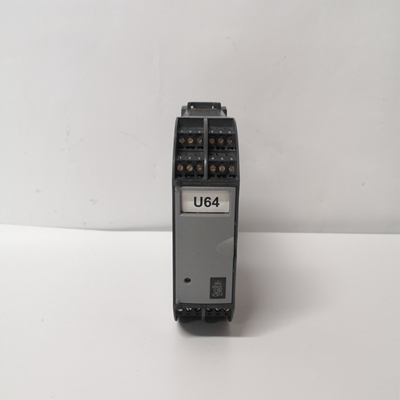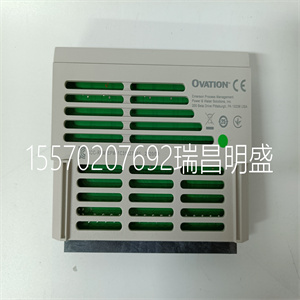
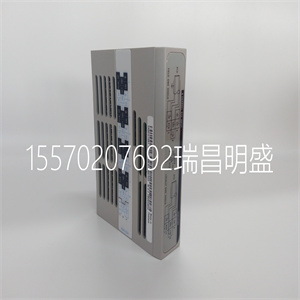
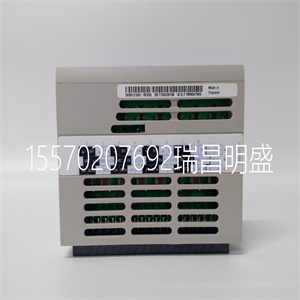
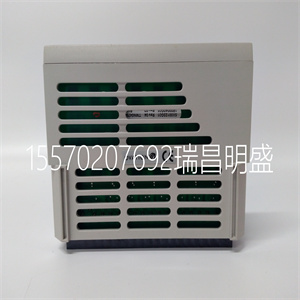
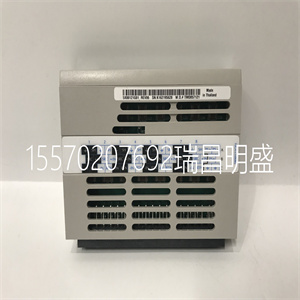


VE4001S2T2B3
DO 120/230隔离,8通道
所有I/O卡都封装在一个通用的形状因子中,即插头
进入I/O接口载体。外壳上清楚地标有:
随附的I/O卡类型。所有卡都有电源和内部
错误指示器。八通道卡具有清晰可见的通道
状态指示灯。
所有板卡均符合ISA G3腐蚀规范
级电子元件的选择和使用
保形涂层。
脉冲计数器可用于大多数DI卡。被支持的
交流信号的大频率从0.1 Hz变化到
24V直流输入为75或120 Hz。对于较的脉冲计数,
达50 KHz,使用多功能卡的速
脉冲输入。
DeltaV系统提供控制模块级时间
日志事件和警报的标记。为了更大的事件
分辨率,16通道事件序列DI卡
可以提供分辨率为+/-0.25 ms的信号驱动事件
每个卡或每个控制器1ms内。请参阅
事件顺序PDS,以了解有关的详细信息
事件数据收集顺序和系统选项
对于此功能。
DeltaV M系列传统I/O,2022年8月
www.emerson。com/deltav 4
I/O卡冗余
冗余I/O卡可用于关键应用。
同一板卡可用于单工或冗余
应用。安装在双宽冗余终端上时
块,卡被识别为冗余对
控制器。控制器扫描每个卡并确定
卡用作活动接口。当检测到故障时,
系统自动切换到备用I/O卡。
DeltaV控制模块参考、单工和冗余
I/O通道相同,无特殊配置
需要利用冗余。
冗余I/O卡的切换在
I/O总线的两次扫描。先通后断触点,确保
数字现场仪器保持通电状态,且过程
不受干扰。模拟输出信号由以下驱动:
在板卡切换期间,两个板卡的时间均小于5 ms。
硬件警报自动报告硬件完整性错误
用于主卡和辅助卡。任何事件
原因:切换也会通过自动报告
系统硬件发出警报并记录在事件历史记录中。
可能导致切换的事件包括。
活动卡内的硬件故障。
活动卡之间的通信故障
以及控制器。
检测现场接线中的故障。
也可以从诊断中启动切换
以及两个卡的运行状况和状态,以及
它们的通道在诊断资源管理器中可用。
系统自动委托新的备用卡。
在安全区域,故障卡可以在电源下更换。
在危险区域,适当的安装程序
必须遵循。
硬件规格
所有I/O接口的通用环境规范
类别Sp
VE4001S2T2B3
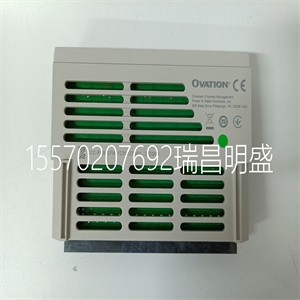
VE4001S2T2B3
DO 120/230 Isolated, 8 channels
All I/O cards are enclosed in a common form factor that plugs
into the I/O interface carrier. The housing is clearly labeled with
the enclosed I/O card type. All cards have power and internal
error indicators. Eight-channel cards have clearly visible channel
status LEDs.
All cards meet ISA G3 corrosion specifications by the careful
selection of superior electronic components and the use of
conformal coating.
Pulse Counters are available on most DI cards. The supported
maximum frequency varies from 0.1 Hz on AC signals to
75 or 120 Hz on 24V DC inputs. For higher pulse counts,
up to 50 KHz, use the Multi-Function card’s high speed
pulse input.
The DeltaV system provides control module level time
stamping for log events and alarms. For greater event
resolution, the 16-channel Sequence-of-Events DI card
can provide signal driven events to a resolution of +/- 0.25 ms
per card, or within 1 ms per controller. Please refer to
the Sequence-of-Events PDS for more information on
Sequence-of-Event data collection and system options
for this feature.
DeltaV M-series Traditional I/O August 2022
www.emerson.com/deltav 4
I/O Card Redundancy
Redundant I/O cards are available for critical applications.
The same card can be used in simplex or redundant
applications. When installed on a two-wide redundant terminal
block, the cards are recognized as a redundant pair by the
controller. The controller scans each card and determines which
card is acting as the active interface. When a fault is detected,
the system automatically switches to the standby I/O card.
DeltaV Control modules reference simplex and redundant
I/O channels identically and there is no special configuration
required to take advantage of redundancy.
Switchover of a redundant I/O card is completed within
two scans of the I/O bus. Make-before-break contacts ensure
digital field instruments remain powered and the process
is undisturbed. Analog output signals are briefly driven by
both cards for < 5 ms during switchover of the card.
Hardware Alerts automatically report hardware integrity errors
for both the primary and secondary cards. Any event that
causes a switchover is also reported automatically through the
system hardware alerts and is logged in the Event Chronicle.
Events that can cause a switchover include.
Hardware failure within the active card.
Communications failure between the active card
and the controller.
Detection of a fault in the field wiring.
A switchover may also be initiated from the diagnostics
explorer, and the health and status of both cards and
their channels are available in the diagnostics explorer.
The system automatically commissions a new standby card.
In safe areas, failed cards can be replaced under power.
In hazardous areas, appropriate installation procedures
must be followed.
Hardware Specifications
Common Environmental Specifications for all I/O Interfaces
Category Sp
Copyright ©2019-2022 瑞昌明盛自动化设备有限公司 版权所有 赣ICP备2021006016号