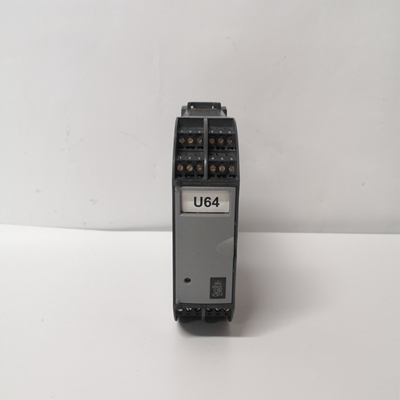
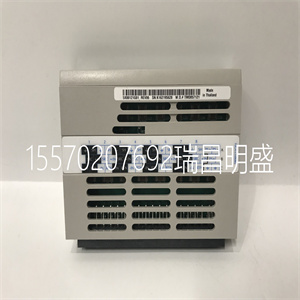


1C31113G02
FL.06.此功能通常用于过载
预警。见图5-74。
5: 低压锁定信号(LU)
如果是直流总线,则终端输出指示信号
电压低于低电压极限,LED
显示“P.oFF”。
6: 外部停止命令(EXT)
如果驱动器:
输出外部故障引起的跳闸信号(E015)。
7: 频率上限(FHL)
如果预设值
频率高于频率上限,并且
工作频率达到上限
频率
8: 频率下限(FLL)
如果预设值
频率高于频率下限,且
工作频率达到下限
频率
9: 零速运行
如果驱动器的
输出频率为0,驱动器处于运行状态。
10: 完成简单的PLC操作阶段
终端输出指示信号(脉冲信号,
500ms宽),如果PLC操作的当前阶段是:
完成。
11: PLC循环完成指示
终端输出指示信号(信号脉冲,
500ms宽),如果PLC操作的一个周期结束。
12: 预设计数值到达
13: 到达指示的参考长度
关于端子12和13,请参阅F7.33~F7.34。
14: 预设长度到达指示
如果实际发生以下情况,则终端输出指示信号:
F9.15定义的长度大于定义的长度
通过F9.14。端子X1~X8的功能应设置为
44号功能。
15: 驱动器就绪(RDY)
如果输出RDY信号,则表示驱动器没有故障,
其直流母线电压正常,可接受启动
命令
16: 驱动器故障
如果驱动器具有:
缺点。
17: 主机扩展功能1
端子Y1、Y2或TC的输出信号直接为
由串行端口控制。请参阅通信
EV2000。
18: 导线操作的上下限
频率
如果选择了横向操作功能,则指示
如果横向工作频率
中心频率计算值高于上限
频率(F0.12)或低于
频率(F0.13),如图5-46所示。
限幅前频率上限
频率下限。
导线操作
Y1:上限和下限
横向操作
限幅后
中央频率。
图5-46横向操作振幅控制
19: 预设操作超时
如果驱动器的
总运行时间(Fn.01)达到预设运行
时间(Fn.00)。
F7.13频率到达信号
(远)
范围:0.00~650.00Hz
【2.50Hz】
如图5-47所示,如果驱动器的输出频率为
在预设频率的检测范围内
将输出信号。
1/2
探测范围
时间
时间
Y
预设
频率。
输出
图5-47频率到达信号
F7.14 FDT1电平范围:0.00~650.00Hz【50.00Hz】
F7.15 FDT1滞后范围:0.00~650.00Hz【1.00Hz】
F7.16 FDT2电平范围:0.00~650.00Hz【25.00Hz】
F7.17 FDT2滞后范围:0.00~650.00Hz【1.00Hz】
F7.14~F7.15是对中2号功能的补充
表5-11.F7.16~F7.17是对3号文件的补充
功能见表5-11。它们的功能相同。
以F7.14~F7.15为例:当驱动器的输出
频率达到某一预设频率(FDT1
电平),其输出指示信号直到其输出
频率下降到FDT1水平的特定频率以下
(FDT1水平-FDT1滞后),如图5-48所示。
1C31113G02 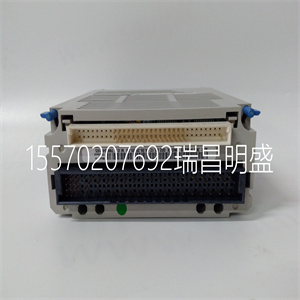
1C31113G02
FL.06. This function is usually used in overload pre-alarm. See Fig. 5-74. 5: Low voltage lock-up signal (LU) The terminal outputs the indicating signal if the DC bus voltage is lower than the low voltage limit, and the LED displays “P.oFF”. 6: External stopping command (EXT) The terminal outputs the indicating signal if the drive outputs tripping signal caused by external fault (E015). 7: High limit of frequency (FHL) The terminal outputs the indicating signal if the preset frequency is higher than upper limit of frequency and the operating frequency reaches the upper limit of frequency. 8: Lower limit of frequency (FLL) The terminal outputs the indicating signal if the preset frequency is higher than lower limit of frequency and the operating frequency reaches the lower limit of frequency. 9: Zero-speed running The terminal outputs the indicating signal if the drive’s output frequency is 0 and the drive is in operating status. 10: Completion of simple PLC operation stages The terminal outputs the indicating signal (pulse signal, 500ms width) if the present stage of PLC operation is finished. 11: PLC cycle completion indication The terminal outputs the indicating signal (signal pulse, 500ms width) if one cycle of PLC operation is finished. 12: preset counting value arriving 13: reference length arriving indication Refer to F7.33~F7.34 for terminals 12 and 13. 14: preset length arrival indication The terminal outputs the indicating signal if the actual length defined by F9.15 is longer than the length defined by F9.14. Function of terminal X1~X8 should be set to No.44 function. 15: drive ready (RDY) If RDY signal is output, it means the drive has no fault, its DC bus voltage is normal and it can receive starting command. 16: Drive fails The terminal outputs the indicating signal if the drive has faults. 17: extended function 1 of host The output signal of terminal Y1, Y2 or TC is directly controlled by a serial port. Refer to the communicating protocol of EV2000. 18: Upper and lower limits of traverse operating frequency If traverse operating function is selected, an indicating signal will be output if the traverse operating frequency calculated by central frequency is higher than upper limit of frequency (F0.12) or lower than the lower limit of frequency (F0.13), as shown in Fig. 5-46. Before limiting amplitude Upper limit of freq Lower limit of freq. Traverse operation Y1: upper and lower limit of traverse operation After limiting amplitude Central freq. Fig. 5-46 Traverse operating amplitude control 19: preset operating time out The terminal outputs the indicating signal if the drive’s total operating time (Fn.01) reaches preset operating time (Fn.00). F7.13 Frequency arriving signal (FAR) Range:0.00~650.00Hz 【2.50Hz】 As shown in Fig. 5-47, if the drive’s output frequency is within the detecting range of preset frequency, a pulse signal will be output. 1/2 detecting range Time Time Y Preset freq. Output Fig. 5-47 Frequency arriving signal F7.14 FDT1 level Range: 0.00~650.00Hz【50.00Hz】 F7.15 FDT1 lag Range: 0.00~650.00Hz【1.00Hz】 F7.16 FDT2 level Range: 0.00~650.00Hz【25.00Hz】 F7.17 FDT2 lag Range: 0.00~650.00Hz【1.00Hz】 F7.14~F7.15 is a complement to the No.2 function in Table 5-11. F7.16~F7.17 is a complement to the No.3 function in Table 5-11. Their functions are the same. Take F7.14~F7.15 for example: when the drive’s output frequency reaches a certain preset frequency (FDT1 level), it outputs an indicating signal until its output frequency drops below a certain frequency of FDT1 level (FDT1 level-FDT1 lag), as shown in Fig. 5-48.
Copyright ©2019-2022 瑞昌明盛自动化设备有限公司 版权所有 赣ICP备2021006016号