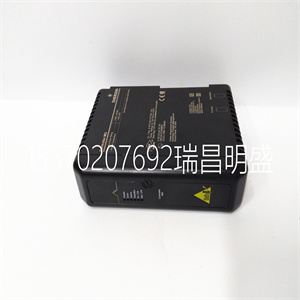


1C31132G01
在典型情况下,用户将确定使伺服滑阀为零所需的电压;
i、 克服机械偏置调节。假设该值为–200 mV
然后,用户将exitSeatVal设置为–200 mV,再加上以下方向的任意量:
阀门关闭,可能为100 mV。因此,用户将exitSeatVal设置为–100 mV。此外,
假设用户将其他相关常数保留为其默认值。什么时候
进入座椅,伺服输出变为+10伏,并将保持至少10伏
秒。当10秒定时器到期时,以及当位置反馈在2
目标位置的百分比(可能为0),伺服输出从10伏变为–100 mV
每秒10%。10伏约为输出范围的50%,因此伺服输出将返回
5秒后降至–100 mV。在–100 mV时,伺服滑阀释放少量流体
从而关闭阀门。
如果目标位置变高,从而将RSR从座位上移除,伺服输出
可随时开始移动阀门,且不依赖于整体动作
使其从10伏回到0。
当RSR在这些不同模式之间移动时,PI跟踪输出
开始由一种非正常模式(如座椅)驱动。因此,过渡
恢复到正常操作是无障碍的。
如果系统未正确调整,当伺服输出时,阀门可能开始打开
达到后退值。如果出现这种情况,并且ABS |目标反馈124 posErrorRetreat,则
被设置在寄存器D中以通知该条件。RSR将输出发送回轨道
并且将不允许通道再次后退,直到退出座位。用户应确保:
寄存器D中的位生成警报,以在发生这种情况时通知操作员。
第22-18页,在第22-8.2节“PI位置控制”之后添加以下章节:
22-8.3级联PI模式
可通过输入“级联=1”并保存
通过键入“SC”进行设置。
当选择级联时,PI 1的+100%到-100%输出转换为-100%到
0%目标位置。然后将该目标位置值用作目标位置或需求,
对于PI 2。
第22-20页,删除第22-9.7节“控制器跟踪”:
第22-24页,删除第22-10.3节“配置”:
第22-26页,在表22-6“调谐常数命令”中添加以下信息:
命令描述
后退速率%每秒输出后退的速率。
直接=1 PI模式。在直接模式(direct=1)下,输出沿一个方向
相对于目标位置。在间接模式(直接=0)中
当目标位置移动为负时,输出变为负
关于位置反馈。
posErrorRetreat=2.0,输出将不会
1C31132G01
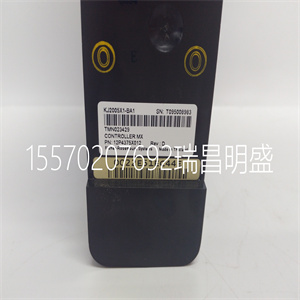
1C31132G01
In a typical scenario, the user would determine the voltage required to null the servo spool;
i.e., overcome the mechanical bias adjustment. Let,s assume the value is –200 mV. The
user would then set exitSeatVal to –200 mV plus an arbitrary amount in the direction of
valve closure, 100 mV perhaps. So, the user would set exitSeatVal to –100 mV. Also,
assume the user leaves the other associated constants to their default values. When
seating is entered, the servo output goes to +10 volts and will remain there for at least 10
seconds. When the 10 second timer expires, and when position feedback is within 2
percent of the target position (probably 0), the servo output ramps from 10 volts to –100 mV
at 10% per second. Ten volts is about 50% of output range, so the servo output would return
to –100 mV after 5 seconds. At –100 mV, the servo spool is letting a small amount of fluid
escape, thus closing the valve.
If the target position went higher, thus removing the RSR from seating, the servo output
would be readily available to begin to move the valve, and would not rely on integral action
to bring it from 10 volts back to 0.
When the RSR is moving between these various modes, the PI tracks the output when it is
begin driven by one of the non-normal modes such as seating. Therefore, the transition
back to normal operation is bumpless.
If the system is not properly tuned, the valve could start to go open when the servo output
reaches the retreat value. If this occurs and ABS|Target-Feedback| > posErrorRetreat, a bit
is set in register D to announce the condition. The RSR sends the output back to the rail
and will not allow the channel to retreat again until seating is exited. The user should ensure
that the bits in register D generate alarms to notify the operator should this occur.
Page 22-18, Add the following section after Section 22-8.2 “PI Position Control”:
22-8.3 CASCADE PI MODE
Cascading of the PI controllers can be selected by entering “CASCADE = 1” and saving the
setting by typing “SC”.
When cascading is selected, the +100% to -100% output of PI 1 is converted to -100% to
0% target position. This target position value is then used as the target position, or demand,
for PI 2.
Page 22-20, Delete Section 22-9.7 “Controller Tracking”:
Page 22-24, Delete Section 22-10.3 “Configuration”:
Page 22-26, Add the following information in Table 22-6 “Tuning Constant Commands:”
Command Description
retreatRate % per second rate of output retreat.
DIRECT =1 PI mode. In direct mode (DIRECT=1) the output goes in a direction
with respect to target position. In indirect mode (DIRECT=0) the
output goes negative when target position moves negative with
respect to position feedback.
posErrorRetreat=2.0 The output will not
Copyright ©2019-2022 瑞昌明盛自动化设备有限公司 版权所有 赣ICP备2021006016号