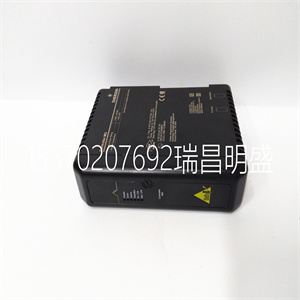


1C31166G01
对于0F之前的固件版本,诊断工作如下所述。以后
修正:测量伺服线圈电压,并与通过调整描述的模型进行比较
常数“kServo”和“kServoDb”。如果电压不适合模型,因为
太大,“开路线圈”被认为是错误的,并且设置了内部诊断位。那么时机呢
下面描述的序列用于将错误位发送到控制器。
25-30页,25-10.6节,“短路线圈诊断”,在一个之后添加以下文字
段:
对于0F之前的固件版本,诊断工作如下所述。以后
修正:测量伺服线圈电压,并与通过调整描述的模型进行比较
常数“kServo”和“kServoDb”。如果电压不适合模型,因为
太大,“开路线圈”被认为是错误的,并且设置了内部诊断位。那么时机呢
下面描述的序列用于将错误位发送到控制器。
25-32页,将表25-7“操作模式内存映射”替换为以下内容:
阀门
定位器
卡片
登记
I/O通道
中的数字
点生成器R/W定义
0 N/A N/A间接ram指针(输出FIFO输入指针)
1 N/A N/A间接ram数据寄存器
2.4 R位置反馈(-1560到32760等于-5.0到105%)
3.5 R线圈电压1(传统上称为S1)
4 6,13 R,W线圈电压2(传统上称为S2)(非冗余
仅配置)
5 7 R线圈电压3(仅限非冗余配置)
IPU-247 19
艾默生过程管理专有2C类
6 8 R原始解调器电压
7不适用R状态字2
0位到15位-未使用。
8 9
1.
2.
3.
R状态字1
0位到3位-模式
0000-未使用
0001-PE模式
0010-启动模式
0011-测试模式
0100至0111-未使用
1000到1011-本地模式
1000-本地模式
1001-就地校准-固定
1010-局部校准-后座
1011-本地校准
1100至1111-正常模式
1100-正常模式
1101-正常校准-固定
1110-正常校准-后座
1111-在正常模式下校准
4位-关机输入状态,0=非激活,1=激活
5位-辅助电压检测
6位-SLIM-ON信号
7位-VP活动标志。VP切换该位以指示:
正在运行。
8位-在零点
(9位至14位-用于冗余配置)
9位-质量-由冗余VP配置使用
10位-冗余的主/备用状态,0=主,
1=备份
11位-LVDT故障-LVDT问题指示器
冗余配置。持续5秒。
12位-RVP解除。
13位-数据验证错误-通过
Ovation和冗余链路不匹配。
14位-模式不匹配-在冗余对中,一个VP处于
正常模式,另一个VP处于本地模式。
15位-低质量校准
9 10 R需求反馈(-1560到32760等于-5.0到105%)
=(位置反馈-bfpB)/bfpM(bfpM和bfpB为
如下所述)
对于非锅炉给水泵应用,bfpM=1.0和bfpB
= 0.0,
因此,“需求反馈”和“位置反馈”是
完全相等。
阀门
定位器
卡片
登记
I/O通道
中的数字
点生成器R/W定义
20 IPU-247
艾默生过程管理专有2C类
25-38页,更改表25-8:“配置命令”:
在一列中,“CoilCount”应为“CoilCount=2”
25-40页,在表25-8底部添加以下内容:“配置命令”:
priorityDemand=-5.0对于固件版本0H及更高版本,“priorityDemand”是目标
停机输入激活时使用的位置。默认值
值,以便升级的模块向后
可共用的用户可以将该值设置为中间值
以便创建自己的工厂故障处理方案。
11W命令寄存器
位0、1和2–校准请求
000=无请求
001=零热校准请求
010=顶部热校准
011=完全校准
100=转到零点
101无效
110无效
111=完全校准并在零点停止
3位-未使用
4位-伙伴质量(冗余VP配置)0=OK,
1=坏
5位-来自的伙伴活动位(冗余VP配置)
寄存器8,7位或伙伴VP
6位-冗余VP的合作伙伴的主/备份状态。
控制器从合作伙伴的状态复制10位
注册1以通知副总裁该合作伙伴是主要或
备份下降。
7位-未使用
8位-臂RVP。设置此位后,备用RVP重新启动,如果主RVP发生故障,则可以接管控制。当
备用RVP已解除,它不会接管
某些类型的故障。
9-F位-未使用
B 12 W需求(-1560至32760等于-5.0至105.0%)
C点状态寄存器
D R/W模块配置状态寄存器(见表25-12)
二次模块配置状态寄存器(见表
25-13)
F电子身份证
1C31166G01
1C31166G01
For firmware revisions prior to 0F, the diagnostic works as described below. For later
revisions servo coil voltage is measured and compared to a model described by tuning
constants “kServo” and “kServoDb’. If the voltage does not fit into the model, due to being
too large, “open coil” is blamed and the internal diagnostic bit is set. Then the timing
sequence described below is used to post the error bit to the controller.
Page 25-30, Section 25-10.6. “Shorted Coil Diagnostic”, add the following text after the first
paragraph:
For firmware revisions prior to 0F, the diagnostic works as described below. For later
revisions servo coil voltage is measured and compared to a model described by tuning
constants “kServo” and “kServoDb”. If the voltage does not fit into the model, due to being
too large, “open coil” is blamed and the internal diagnostic bit is set. Then the timing
sequence described below is used to post the error bit to the controller.
Page 25-32, Replace Table 25-7.” Operating Mode Memory Map” with the following:
Valve
Positioner
Card
Register
I/O Channel
Number in the
Point Builder R/W Definition
0 N/A N/A Indirect ram pointer (Output FIFO Put Pointer)
1 N/A N/A Indirect ram data register
2 4 R Position feedback (-1560 to 32760 equals -5.0 to 105%)
3 5 R Coil voltage 1 (traditionally called S1)
4 6, 13 R, W Coil voltage 2 (traditionally called S2) (non-redundant
configuration only)
5 7 R Coil voltage 3 (non-redundant configuration only)
IPU-247 19
Emerson Process Management Proprietary Class 2C
6 8 R Raw demodulator voltage
7 N/A R Status Word 2
Bits 0 through 15 - Not used.
8 9
1
2
3
R Status Word 1
Bits 0 through 3 - modes
0000 - not used
0001 - PE mode
0010 - start mode
0011 - test mode
0100 through 0111 - not used
1000 through 1011 - local modes
1000 - local mode
1001 - calibrating in local - seated
1010 - calibrating in local - backseated
1011 - calibrating in local
1100 through 1111 - normal modes
1100 - normal mode
1101 - calibrating in normal - seated
1110 - calibrating in normal - backseated
1111 - calibrating in normal mode
Bit 4 - Shutdown input status, 0 = inactive, 1 = activated
Bit 5 - Auxiliary voltage sense
Bit 6 - SLIM-ON signal
Bit 7 - VP alive flag. The VP toggles this bit to indicate that it
is running.
Bit 8 - At null point
(Bits 9 through 14 - for redundant configuration)
Bit 9 - Quality- Used by redundant VP configuration
Bit 10 - Primary/Backup status for redundancy, 0 = Primary,
1 = Backup
Bit 11 - LVDT Trouble - LVDT problem indicator for
redundant configuration. Held True for five seconds.
Bit 12 - RVP disarmed.
Bit 13 - Data Validation Error - The position demand over the
Ovation and redundancy link do not match.
Bit 14 - Mode mismatch - In a redundant pair, one VP is in
Normal mode and the other VP is in Local mode.
Bit 15 - poor quality calibration
9 10 R Demand feedback (-1560 to 32760 equals -5.0 to 105%)
= (Position feedback - bfpB) / bfpM (bfpM and bfpB are
described below)
For non-boiler feed pump applications, bfpM = 1.0 and bfpB
= 0.0,
therefore “Demand feedback” and “Position feedback” are
exactly equal.
Valve
Positioner
Card
Register
I/O Channel
Number in the
Point Builder R/W Definition
20 IPU-247
Emerson Process Management Proprietary Class 2C
Page 25-38, Change Table 25-8:”Configuration Commands”:
In the first column, “CoilCount” should read “CoilCount = 2”
Page 25-40, Add the following to the bottom of Table 25-8:”Configuration Commands”:
priorityDemand = -5.0 For firmware revisions 0H and later, “priorityDemand” is the target
position used when the shutdown input is activated. The default
value is selected so that upgraded modules are backward
compatible. The user can set this value to an intermediate value
in order to create his own scheme for handling of plant upsets.
A 11 W Command Register
Bit 0, 1, and 2 – calibration requests
000 = no request
001 = zero hot cal request
010 = top hot cal
011 = full calibration
100 = go to null point
101 invalid
110 invalid
111 = full calibration and stop at null point
Bit 3 - Not used
Bit 4 - Partner Quality (redundant VP configuration) 0=OK,
1=BAD
Bit 5 - Partner Alive Bit (redundant VP configuration) from
register 8, bit 7 or Partner VP
Bit 6 - Redundant VP’s Partner’s Primary/Backup Status.
The Controller copies Bit 10 from the partner’s status
register 1 to inform the VP that the partner is a Primary or
Backup drop.
Bit 7 - Not used
Bit 8 - arm RVP. When this bit is set, the backup RVP is rearmed and can take over control if the primary fails. When a
backup RVP is disarmed, it will not take over control for
certain types of failures.
Bit 9-F - Not used
B 12 W Demand (-1560 to 32760 equals -5.0 to 105.0%)
C Point Status Register
D R/W Module Configuration Status Register (see Table 25-12)
E R Secondary Module Configuration Status Register (see Table
25-13)
F Electronic ID
Copyright ©2019-2022 瑞昌明盛自动化设备有限公司 版权所有 赣ICP备2021006016号