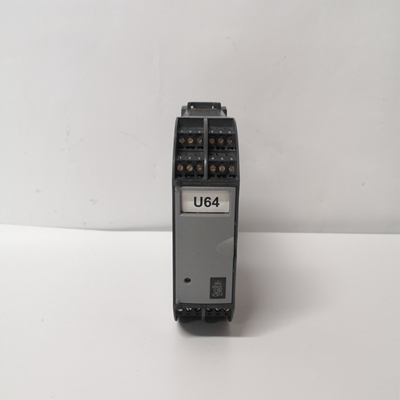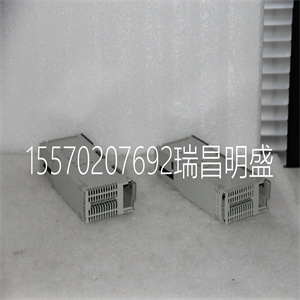
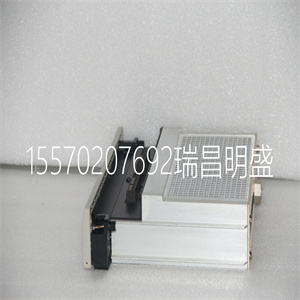
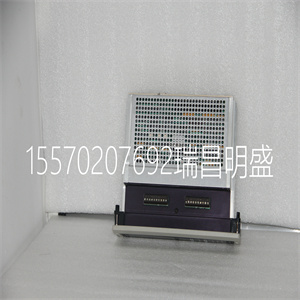
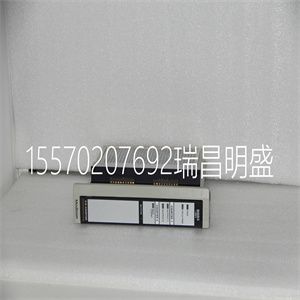


140XSM01000
范围从01到99的xx指定输入信号
类型
选择输入通道作为远程冷接点时
进行输入读数的软件平滑。
这种平滑允许远程的温度响应
冷接点参考,与温度紧密匹配
远程终端块的响应。
为热电偶输入配置的每个ASI模块需要:
冷接点参考。每个ASI模块只能有一个
多16个热电偶输入的冷端参考。这个
例外情况是热电偶输入之一为:
用作远程冷接点参考。
注:FCs 215、216和217中与
IMASI23可以在在线配置期间更改。进行更改时
对于输入通道参数(FC 216),通道将保持后一个值
状态在短时间内保持不变。此保持时间基于在线配置期间更改的信道数,以及
在该通道的FC 216块中指定的分辨率。计划等待时间
对于在线配置期间改变的每个FC 216,为4秒(坏情况)。
在ASI情况下,在控制器配置中定义一个FC 217
稍后需要进行模块调整或现场校准操作。
校准输入
WBPEEUI240774A0 4-3
校准输入
校准在工厂完成,校准数据为:
存储在IMASI23模块的非易失性存储器中。无字段
校准是必要的。但是,如果现场校准为
需要时,使用中的“现场校准”中描述的程序
本节。
通过调整FC,使用控制器现场校准ASI模块
217.有关FC 215、216和
217.有必要分别定义FC 215和一个FC 216
现场校准ASI模块的配置中的输入通道。此外,现场校准模块时,FC 217 S4中定义的校准类型必须与
FC 216 S4中定义的输入信号类型。考虑以下示例。
示例1如果校准毫伏或热电偶通道,则S4
FC 217的S4必须设置为零,FC 216的S4必须设为
毫伏或热电偶输入类型中的任何一种。在这个
在这种情况下,FC 216的S4必须在以下范围内:
x01!S4<x20
-或-
x60!S4<x99
示例2如果为高电平电压校准通道,则FC 217的S4
必须设置为1,并且FC 216的S4必须设置为
考虑高电平电压范围(4至20毫安
高电平输入类型)。在这种情况下,FC 216应在
如下:
x40!S4<x60
-或-
S4=x99
示例3如果校准RTD模式的通道,则FC 217的S4必须
设置为2,且FC 216的S4必须设置为
RTD类型。在这种情况下,FC 216的S4应在以下范围内:
x20!S4<x40
操作员开始、引导和结束现场校准
:FC 217。通过调整此块启动命令。这个
命令错误作为输出(N+4)提供
4-4 WBPEEUI240774A0
现场校准
功能块。它反映了近发布的
校准命令。
通道场校准的状态也报告为
该功能块的输出(N+1)。该输出显示了新现场校准命令中引用的通道的状态。
现场校准
在正常情况下,无需进行现场校准。它
如果超高,可以在现场执行校准程序
提供稳定、已知、确的参考。现场校准数据存储在非易失性存储器中。
工厂校准数据存储在的非易失性存储区域中。如果现场校准不能提供所需的
结果,可以恢复出厂校准数据。通过
FC 217至11的调谐规范S1。
信号读数可以通过改变增益或
点信号的偏移。在大多数情况下,更改这些值
将代替现场校准。参见FC 217,规范S5。
这是设置用户增益和偏移操作的示例:
在本例中,规范具有以下功能:
•S1选择现场校准操作(五)。价值
五是设置用户增益和偏移命令。
•S2是FC 215的块地址,对应于:
IMASI23模块。
•S3调出要调谐的频道(频道1)。
功能FC 217规范
S1 S2 S3 S4 S5 S61
调谐频道1偏移,以及
增益校正
5100增益
价值
抵消
价值
调谐2频道偏移量和
增益校正
5 100 2 0
注:
1.不使用S7和S8。
现场校准
WBPEEUI240774A0 4-5
•S4设置输入类型(零等于毫伏)。
•S5设置增益量。将S5设置为增益值。
•S6设置偏移值。将S6设置为偏移值。
检查块N+2或块N+3,查看设置的用户增益和
偏移命令被正确处理,并被合并
进入ASI模块
140XSM01000
140XSM01000
The xx, which ranges from 01 to 99, specifies the input signal
type.
When an input channel is selected as a remote cold junction
reference, software smoothing of the input reading takes place.
This smoothing allows the temperature response of the remote
cold junction reference to closely match the temperature
response of the remote terminal blocks.
Each ASI module configured for a thermocouple input requires
a cold junction reference. Each ASI module can only have one
cold junction reference for up to 16 thermocouple inputs. The
exception to this is when one of the thermocouple inputs is
used as a remote cold junction reference.
NOTE: All specifications in FCs 215, 216, and 217 associated with the
IMASI23 can be changed during online configuration. When changes are made
to the input channel parameters (FC 216), the channel will hold the last value
with status unchanged for a short period. This hold time is based on the number of channels that were changed during online configuration, as well as the
resolution specified in the FC 216 blocks for that channel. Plan on a hold time
of four seconds (worst case) for each FC 216 changed during online configuration.
Define one FC 217 in the controller configuration in case ASI
module tuning or field calibration operations are needed later.
Calibrating Inputs
WBPEEUI240774A0 4 - 3
Calibrating Inputs
Calibration is done at the factory and the calibration data is
stored on the IMASI23 module in nonvolatile memory. No field
calibration is necessary. If, however, field calibration is
desired, use the procedure described in Field Calibration in
this section.
Field calibrate the ASI module with the controller by tuning FC
217. Refer to Appendix C for descriptions of FC 215, 216, and
217. It is necessary to define FC 215 and one FC 216 for each
input channel in a configuration to field calibrate the ASI module. In addition, when field calibrating the module, the calibration type defined in S4 of FC 217 must be consistent with the
input signal type defined in S4 of FC 216. Consider the following examples.
Example 1 If calibrating a channel for millivolts or thermocouples, then S4
of FC 217 must be set to zero and S4 of FC 216 must be set to
any one of the millivolt or thermocouple input types. In this
case, S4 of FC 216 must be within the following:
x01 ! S4 < x20
- or -
x60 ! S4 < x99
Example 2 If calibrating a channel for high level voltage, then S4 of FC 217
must be set to one and S4 of FC 216 must be set to one of the
high level voltage ranges (4 to 20 milliamperes is considered
high level input type). In this case, FC 216 should be within the
following:
x40 ! S4 < x60
- or -
S4 = x99
Example 3 If calibrating a channel for RTD mode, then S4 of FC 217 must
be set to two and S4 of FC 216 must be set to any one of the
RTD types. In this case, S4 of FC 216 should be within the following range:
x20 ! S4 < x40
The operator starts, guides, and ends the field calibration with
FC 217. Commands are initiated by tuning this block. The
command errors are provided as an output (N+4) of this
4 - 4 WBPEEUI240774A0
Field Calibration
function block. It reflects the status of the most recently issued
calibration command.
The status of a channel field calibration is also reported as an
output (N+1) of this function block. This output shows the status for the channel referenced in the most recent field calibration command.
Field Calibration
Field calibration is not necessary in normal situations. It
is possible to perform calibration procedures in the field if ultra
stable, known, precision references are available. Field calibration data is stored in nonvolatile memory.
Factory calibration data is stored in a unique nonvolatile memory area. If a field calibration does not provide the desired
results, the factory calibration data can be restored. Do this by
tuning specification S1 of FC 217 to 11.
Signal readings can be compensated by changing the gain or
offset of the point signal. In most cases changing these values
will take the place of a field calibration. Refer to FC 217, specification S5.
This is an example of a set user gain and offset operation:
In this example the specifications have these functions:
• S1 selects the field calibration operation (five). The value of
five is the set user gain and offset command.
• S2 is the block address of the FC 215 which corresponds to
the IMASI23 module.
• S3 calls up the channel to be tuned (channel one).
Function FC 217 Specifications
S1 S2 S3 S4 S5 S61
Tune channel 1 offset and
gain correction
5 100 1 0 gain
value
offset
value
Tune channel 2 offset and
gain correction
5 100 2 0
NOTE:
1. S7 and S8 are not used.
Field Calibration
WBPEEUI240774A0 4 - 5
• S4 sets the input type (zero equals millivolt).
• S5 sets the amount of gain. Set S5 to the gain value.
• S6 sets the offset value. Set S6 to the offset value.
Check block N+2 or block N+3 to see if the set user gain and
offset command is processed correctly, and is incorporated
into ASI module input reading of that channel and type.
NOTE: Field calibrating all 16 channels for all four input types on an IMASI23
module is a lengthy procedure that may require up to four hours to complete
when done properly.
A channel can be disabled and field calibrated separately from
the rest of the active channels on the ASI module. Each channel can be calibrated for any of the three input ranges:
• Individual channel low level voltage range (-100 to
+100 millivolt).
• Individual channel high level voltage range (-10 V to +10 V).
• Individual channel three-wire resistance range (5 ohms to
500 ohms).
To field calibrate each of the four ranges:
1. Configure the point in the system.
2. Disable the point from the system.
3. Calibrate the point with the new value (two calibration
points per channel and input type).
4. Enable the point to the system.
Before beginning calibration, each channel must be configured
with one FC 216, and the calibration type defined in S4 of FC
217 must be consistent with the input signal defined in S4 of
FC 216.
The input channel being field calibrated must be disabled
before any calibration commands are accepted. Disabling the
input channel removes the channel from the normal input
scan processing. The point shows bad quality while it is disabled. The value of the input is undefined while the channel is
disabled. All other channels are not affected and continue processing input data according to the conf
Copyright ©2019-2022 瑞昌明盛自动化设备有限公司 版权所有 赣ICP备2021006016号