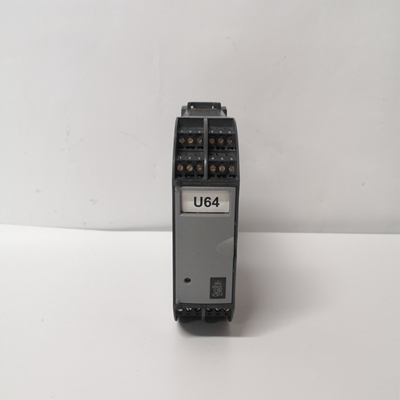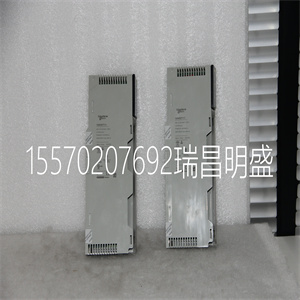


140XTS00100
在执行点场校准之前,
确值连接到输入通道。在期间
点校准,ASI模块读取输入并存储其
数字化价值。输入范围内的两点校准
必须执行。计算所有这些调整系数
并在以下情况下存储在ASI模块的非易失性存储器中:
点已启用。
低电平、热电偶和电平输入场校准需要确的电压值。对于RTD输入校准,使用密电阻值。FC 217和
对所有三个现场校准使用相同的程序。
在正常输入扫描之前,必须启用每个输入通道
则恢复处理。启用命令指示
校准过程完成的ASI模块。在那
ASI模块将现场校准值存储在非易失性存储器中的时间。模块在输入期间使用这些值
扫描处理以计算校准通道的校正因子。
如果未执行现场校准,或如果退出命令
已发出以取消校准,新的校准校正值不计算,先前的校正
将继续使用系数。点的校准没有变化。输入点的质量仍然很差
直到对该点执行成功的输入扫描。如果控制器或ASI模块
当现场校准序列正在进行时(在发出启用之前),停止或进入配置模式时
现场校准序列中止,必须重新启动。
校准ASI模块后,无需进一步手动校准。机载低漂移参考保持
校准的准确性。
程序
原始ASI模块校准在工厂进行
在受控、稳定的环境中。环境温度
必须在25(±1.0)摄氏度下保持恒定。现场校准位置必须无气流。
在每个ASI模块在其校准位置上电之后,
校准前留出一些预热时间,以获得准确的结果。预热时间应至少为15分钟。
现场校准
WBPEEUI240774A0 4-7
ASI模块上有三种类型的输入:
•低电平电压范围(-100至+100毫伏)。
•电平电压范围(-10 V至+10 V)。
•三线电阻范围(5欧姆至500欧姆)。
16个输入中的每一个都可以用作电平、低电平或低电平,
或三线RTD输入。
电平、低电平和三线RTD输入可以是
使用本程序进行现场校准。
ABB Automation建议检查
校准后每个指定范围内的通道
每个信道。
所需测试设备
执行现场校准所需的设备包括:
•每个ASI模块一个电源模块安装单元插槽
(+5 V,断电中断)。
•一个控制器,带有I/O扩展器总线分路器。
•控制器接口设备,如作曲家或指挥工作站。
•NKAS01电缆及其终端设备(NTAI06)。
要进行现场校准的每个输入类型需要超稳定,
已知的度源。
低电平电压
来源
•-100至+100毫伏范围,度为“10微伏”(或该范围的0.005%)。
•直流输出电阻小于2.0欧姆。
电平电压
来源
•-10 V至+10 V范围,度为“1.0毫伏(或
“该范围的0.005%)。
•直流输出电阻小于5.0欧姆。
电阻源•5.0欧姆至500欧姆范围,度为“25毫欧姆(或指定范围的0.005%)。
4-8 WBPEEUI240774A0
现场校准
单通道校准
本节提供了低液位的现场校准程序,
电平和电阻。要校准中的每个通道:
模块:
1.在系统中配置点。
2.禁用信道。
3.用两个校准点校准通道。
4.启用信道。
本示例显示了为通道1的低电平电压范围校准调整FC 217规格的值
在块地址处由FC 215引用的ASI模块上
100.FC 216的S4也必须设置为任何热电偶
或毫伏类型。
此示例显示了要在中调整规范的值
将通道现场校准数据重置为原始数据
地址1处ASI模块的出厂设置。这是
仅当现场校准不成功时才需要。
以下步骤为低电平现场校准通道1:
电压范围为-100至+100毫伏。更改规格S4
功能FC 217规范
S1 S2 S3 S4 S5 S6
禁用点1 100 1 x1 x1
点校准2 2 100 1 0值x1
启用点3 100 1 x1 x1
笔记:
1.x是一个不关心的值。
2.重复此项至少2次,使规格5等于施加的低电压值
连接到输入端子。度可达11点ma
140XTS00100
140XTS00100
fore performing a point field calibration, ultra stable, known,
precise values are connected to the input channel. During
point calibration, the ASI module reads the input and stores its
digitized value. Two point calibrations within an input range
must be performed. All these adjustment factors are calculated
and stored in the ASI module’s nonvolatile memory when the
point is enabled.
Precision voltage values are required for low level, thermocouple, and high level input field calibration. For RTD input calibration, precision resistance values are used. FC 217 and the
same procedure is used for all three field calibrations.
Each input channel must be enabled before normal input scan
processing is resumed. The enable command indicates to the
ASI module that the calibration process is completed. At that
time the ASI module stores the field calibration values in nonvolatile memory. The module uses these values during input
scan processing to calculate the correction factors for the calibrated channel.
If no field calibration is performed, or if the escape command
was issued to cancel the calibration, the new calibration correction values are not computed and the previous correction
factors will continue to be used. There is no change to the calibration of the point. The quality of the input point remains bad
after an enable command until a successful input scan is performed for that point. If either the controller or the ASI module
is stopped, or placed into configure mode while a field calibration sequence is in progress (before an enable is issued), the
field calibration sequence is aborted and must be restarted.
Once the ASI module is calibrated, no further manual calibration is necessary. Onboard, low-drift references maintain the
accuracy of the calibration.
Procedure
The original ASI module calibration is performed in the factory
in a controlled, stable environment. Ambient temperature
must remain constant at 25 (±1.0) degrees C. The field calibration location must be free from drafts.
After each ASI module is powered-up in its calibration location,
allow some warmup time before calibration for the most accurate results. This warmup time should be at least 15 minutes.
Field Calibration
WBPEEUI240774A0 4 - 7
There are three types of inputs on the ASI module:
• Low level voltage range (-100 to +100 millivolt).
• High level voltage range (-10 V to +10 V).
• Three-wire resistance range (5 ohms to 500 ohms).
Each of the 16 inputs can be used as a high level, a low level,
or a three-wire RTD input.
The high level, low level, and three-wire RTD inputs can be
field calibrated with this procedure.
ABB Automation recommends checking the accuracy of the
channel within each of the specified ranges after calibrating
each channel.
Test Equipment Required
The devices required to perform the field calibration are:
• One powered module mounting unit slot per ASI module
(+5 V with power fail interrupt).
• One controller with I/O expander bus dipshunts.
• A controller interface device such as a Composer or Conductor workstation.
• An NKAS01 cable and its termination device (NTAI06).
Each input type to be field calibrated requires ultra-stable,
known precision sources.
Low-Level Voltage
Source
• -100 to +100 millivolt range with an accuracy of "10 microvolts (or "0.005 percent of this range).
• DC output resistance of less than 2.0 ohms.
High-Level Voltage
Source
• -10 V to +10 V range with an accuracy of "1.0 millivolt (or
"0.005 percent of this range).
• DC output resistance of less than 5.0 ohms.
Resistance Source • 5.0 ohms to 500 ohms range with an accuracy of "25 milliohms (or "0.005 percent of specified range).
4 - 8 WBPEEUI240774A0
Field Calibration
Individual Channel Calibration
This section provides field calibration procedures for low level,
high level, and resistance. To calibrate each channel in the
module:
1. Configure the point in the system.
2. Disable the channel.
3. Calibrate the channel with two calibration points.
4. Enable the channel.
This example shows the values to tune the FC 217 specifications for a low level voltage range calibration for channel one
on the ASI module referenced by the FC 215 at block address
100. S4 of FC 216 must also be set to any of the thermocouple
or millivolt types.
This example shows the values to tune the specifications to in
order to reset the channel field calibration data to the original
factory settings for an ASI module at address one. This is
needed only if the field calibration is unsuccessful.
The following steps field calibrate channel one for the low level
voltage range of -100 to +100 millivolt. Change specification S4
Function FC 217 Specifications
S1 S2 S3 S4 S5 S6
Disable point 1 100 1 x1 x1 x1
Point calibration2 2 100 1 0 value x1
Enable point 3 100 1 x1 x1 x1
NOTES:
1. x is a do not care value.
2. Repeat this entry at least 2 times making specification 5 equal to the low voltage value applied
to the input terminals. For maximum accuracy, up to 11 points may be identified for adjustment of
input channel nonlinearities, resulting in 10 linear segments for correction.
Function FC 217 Specifications
S1 S2 S3 S4 S5 S6
Reset factory
calibration
11 100 x1 x1 x1 x1
Copyright ©2019-2022 瑞昌明盛自动化设备有限公司 版权所有 赣ICP备2021006016号