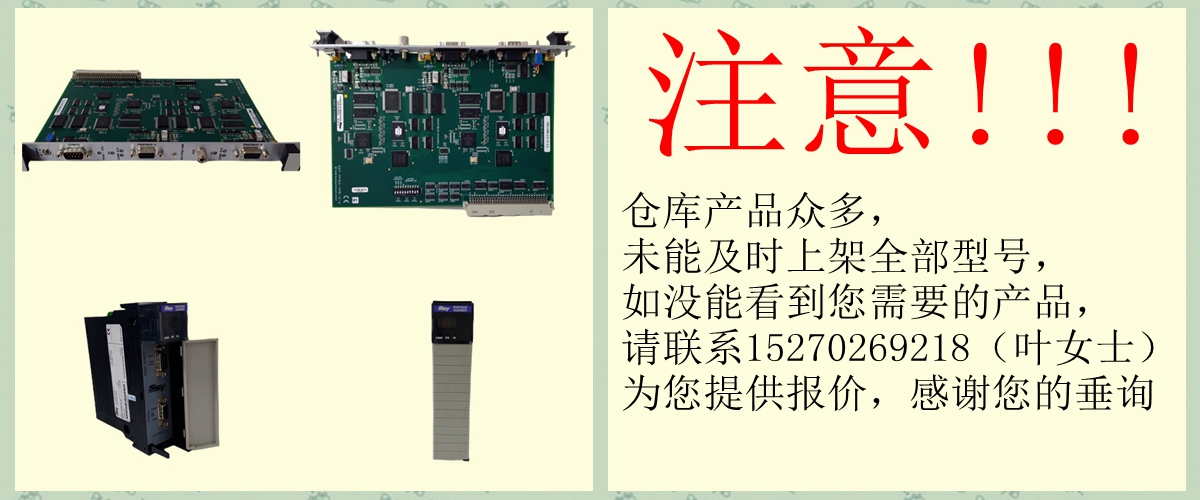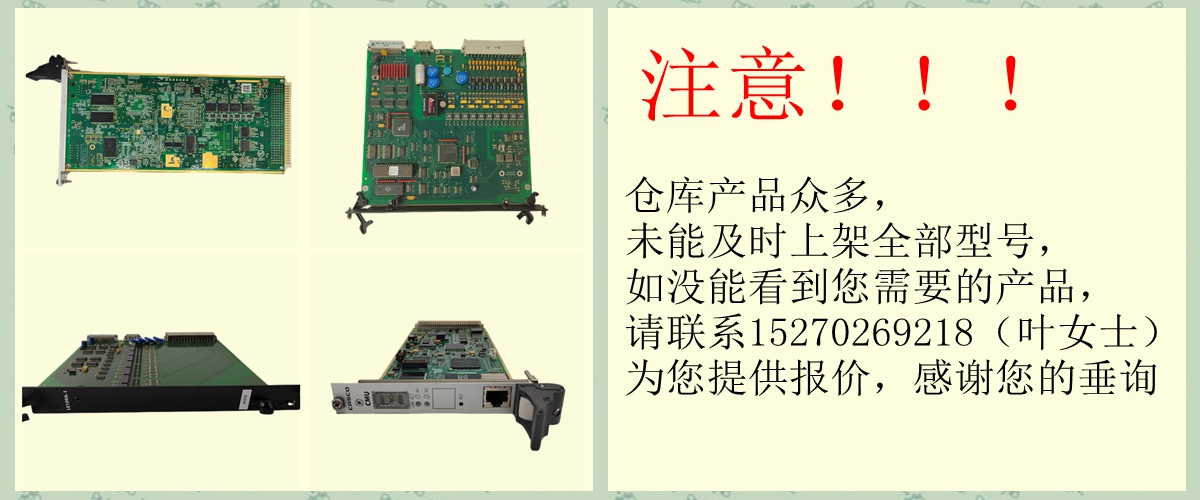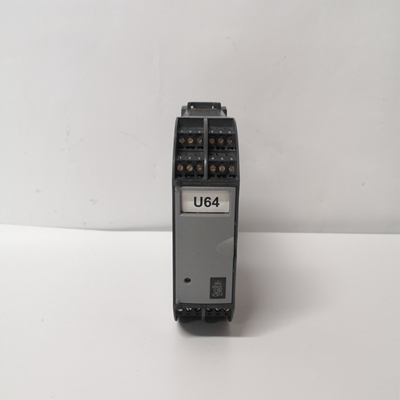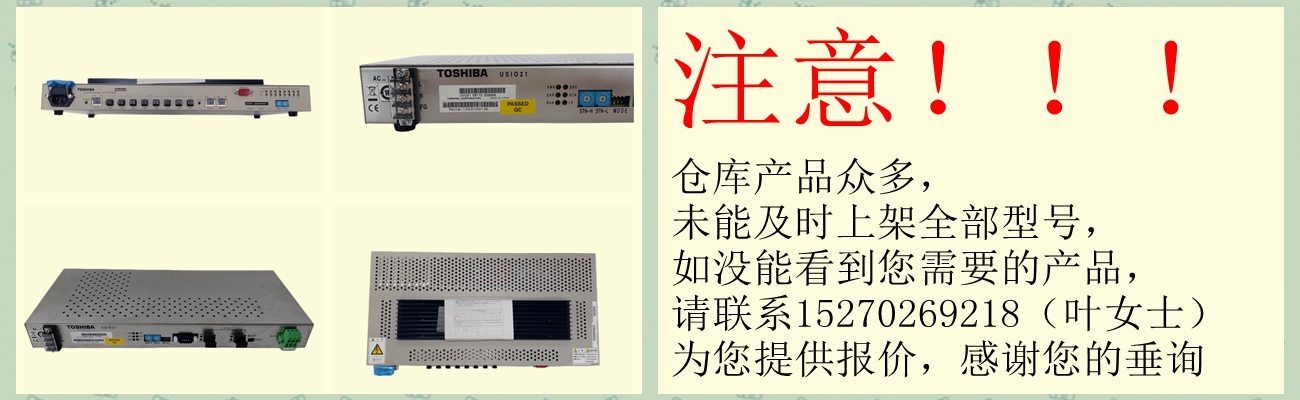


140XTS00203
并使用这些步骤配置高电平或电阻
输入。此外,FC 216的S4必须与以下类型一致:
正在进行校准。
1.在FC 217的控制器中定位块地址。
2.验证I/O扩展器总线分路是否到位,以
允许ASI模块总线通信。
3.在ASI模块上,对于每个输入通道,将
跳线如图3-3所示。
4.将FC 217的S2设置为FC 215的块地址
参考ASI模块。
5.将ASI模块插入通电插槽。绿色LED
将为实心,表示模块链接到中的FC 215
配置
6.让ASI模块预热至少15分钟。
7.将控制器置于执行模式。
8.将FC 217设置为所需规格。在通过执行调谐操作发出每个校准命令之后,
监控校准命令状态,以确定是否存在
现场校准期间发生错误。
本示例校准ASI模块上的通道1,该模块:
由块地址100处的FC 215引用。对于低电平
电压,通过调整这些值禁用所需通道
进入规范。
a、 禁用点(S1=1)。
b、 块地址100处FC 215引用的ASI模块
(S2=100)。
c、 ASI模块信道一(S3=1)。
9.验证低电平电压源是否连接到
待校准的ASI模块和源的通道1
电压设置为满刻度值(+100毫伏)。
注:每次电源电压改变时,至少15秒稳定
进行点场校准之前需要时间。如果源本身
具有可测量的沉降时间,将其添加到15秒的要求中。
4-10 WBPEEUI240774A0
现场校准
10.将FC 217规范S5调谐到输入电压或电阻值。对于本例,调整以下规范:
a、 执行点校准(S1=2)。
b、 块地址100处FC 215引用的ASI模块
(S2=100)。
c、 ASI模块信道一(S3=1)。
d、 校准类型零(低电平)(S4=0)。
e、 校准参数1-100(毫伏)(S5=100)。
成功的现场校准操作可通过以下方式进行验证:
检查FC 217输出N+1和N+4中的零值。如果
点校准不成功,将显示错误代码
在FC 217中,输出N+1和N+4,这有助于
故障排除。
11.成功的现场校准操作可通过以下方式进行验证:
检查FC 217中的零值,输出N+1和N+4用于
零值。如果点校准不成功,则出现错误
代码将出现在FC 217中,输出N+1和N+4
可以帮助进行故障排除。
在此步骤中,已对两个点进行了现场校准(0和完全
刻度),并且可以执行启用校准命令。
三个输入范围为低电平、高电平或RTD。
如果需要,对通道2至16重复步骤7至10
以校准ASI模块上的所有16个通道。
12.启用该点。将FC 217规范S1调谐到
启用信道。对于本例,调整这些
规格:
a、 启用信道(S1=3)。
b、 块地址100处FC 215引用的ASI模块
(S2=100)。
c、 ASI模块信道一(S3=1)。
d、 校准类型x(S4=x)。x是一个不关心的值。
e、 校准参数x(S5=x)。
现场校准
WBPEEUI240774A0 4-11
可以通过检查FC来验证启用操作是否成功
217输出N+1和N+4作为零值。如果启用
不成功,错误代码将出现在FC 217输出中
N+1和N+4,这有助于故障排除。
WBPEEUI240774A0
WBPEEUI240774A0 5-1
操作程序第5节
介绍
本节介绍IMASI23的启动和操作
模块(ASI)。
启动
ASI模块和控制器之间的通信开始
当两个模块配置正确时(请参阅
第4节)。FCs 215和216中的ASI模块地址必须:
与地址双列直插开关上设置的地址相同。
启动时,当ASI模块通电时,以及
控制器进入执行模式,所有信道初都标记为质量差,直到控制器下载
配置数据和ASI模块处理有效输入
信号
活动
控制器向ASI模块发送中断命令
每当它发送新的配置数据时。这个中断
使ASI模块读取配置数据并初始化其输入处理、转换和补偿计算。一旦由控制器配置,ASI模块
扫描其输入并将校正后的值提供给
I/O扩展器总线上的控制器。控制器读取
ASI模块在其正常段周期内的值
操作。有关中的更多信息,请参阅第2节
140XTS00203

140XTS00203
and use these steps to configure high level, or resistance
inputs. Also S4 of FC 216 must be consistent with the type of
calibration being performed.
1. Locate the block address in the controller of FC 217.
2. Verify that the I/O expander bus dipshunts are in place to
allow ASI module bus communications.
3. On the ASI module, for each input channel, place the
jumpers as shown in Figure 3-3.
4. Set S2 of FC 217 to the block address of the FC 215 which
references the ASI module.
5. Insert the ASI module into a powered slot. The green LED
will be solid indicating the module is linked to a FC 215 in the
configuration.
6. Allow the ASI module to warm up for at least 15 minutes.
7. Put the controller in execute mode.
8. Set FC 217 for the required specifications. After each calibration command is issued by performing a tune operation,
monitor the calibration command status to determine if any
errors have occurred during the field calibration.
This example calibrates channel one on the ASI module which
is referenced by the FC 215 at block address 100. For low level
voltage, disable the desired channel by tuning these values
into the specifications.
a. Disable point (S1 = 1).
b. ASI module referenced by FC 215 at block address 100
(S2 = 100).
c. ASI module channel one (S3 = 1).
9. Verify that the low level voltage source is connected to
channel one of the ASI module to be calibrated and the source
voltage is set to the full scale value (+100 millivolt).
NOTE: Each time the source voltage is changed, at least 15 seconds settling
time is required before the point field calibration takes place. If the source itself
has a measurable settling time, add this to the 15 second requirement.
4 - 10 WBPEEUI240774A0
Field Calibration
10. Tune FC 217, specification S5 to the input voltage or resistance value. For this example, tune these specifications:
a. Perform point calibration (S1 = 2).
b. ASI module referenced by FC 215 at block address 100
(S2 = 100).
c. ASI module channel one (S3 = 1).
d. Calibration type zero (low level) (S4 = 0).
e. Calibration parameter 1 - 100 (millivolts) (S5 = 100).
Successful field calibration operations can be verified by
checking for a zero value in FC 217, output N+1 and N+4. If the
point calibration was unsuccessful, an error code will appear
in the FC 217, outputs N+1 and N+4 which can aid in
troubleshooting.
11. Successful field calibration operations can be verified by
checking for a zero value in FC 217, outputs N+1 and N+4 for a
zero value. If the point calibration was unsuccessful, an error
code will appear in the FC 217, outputs N+1 and N+4 which
can aid in troubleshooting.
At this step, two points have been field calibrated (0 and full
scale) and the enable calibration command can be executed.
The three input ranges are low level, high level, or RTD.
If desired, repeat Steps 7 through 10 for channels 2 through 16
to calibrate all 16 channels on the ASI module.
12. Enable the point. Tune the FC 217, specification S1 to
enable the channel. For this example, tune these
specifications:
a. Enable the channel (S1 = 3).
b. ASI module referenced by FC 215 at block address 100
(S2=100).
c. ASI module channel one (S3 = 1).
d. Calibration type x (S4 = x). x is a do not care value.
e. Calibration parameter x (S5 = x).
Field Calibration
WBPEEUI240774A0 4 - 11
A successful enable operation can be verified by checking FC
217, outputs N+1 and N+4 for a zero value. If the enable was
unsuccessful, an error code will appear in the FC 217, outputs
N+1 and N+4 which can aid in troubleshooting.
WBPEEUI240774A0
WBPEEUI240774A0 5 - 1
Operating Procedures Section 5
Introduction
This section explains the startup and operation of the IMASI23
module (ASI).
Startup
Communication between the ASI module and controller starts
when the two modules are configured correctly (refer to
Section 4). The ASI module address in FCs 215 and 216 must
be the same as the address set on the address dipswitch.
Upon startup, when power is applied to the ASI module and
the controller is put into execute mode, all channels are initially marked bad quality until the controller downloads the
configuration data and the ASI module processes a valid input
signal.
Operation
The controller sends an interrupt command to the ASI module
whenever it sends new configuration data. This interrupt
causes the ASI module to read the configuration data and initialize its input handling, conversion, and compensation calculations. Once configured by the controller, the ASI module
scans its inputs and makes corrected values available to the
controller over the I/O expander bus. The controller reads the
values from the ASI module during its normal segment cycle
operations. Refer to Section 2 for more in
Copyright ©2019-2022 瑞昌明盛自动化设备有限公司 版权所有 赣ICP备2021006016号