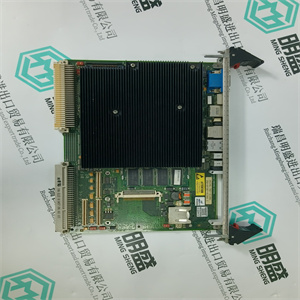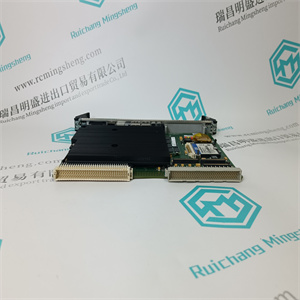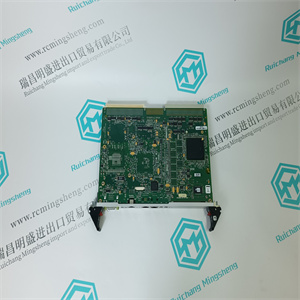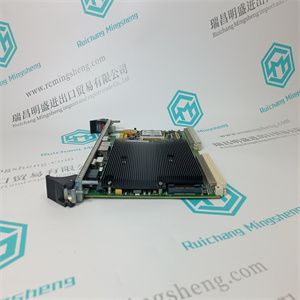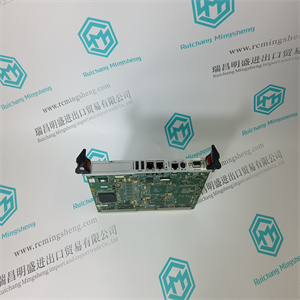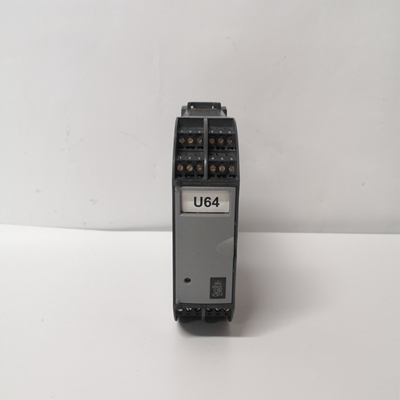



ABB 过程驱动控制器 70PR05B-ES HESG332204R0001
图5.灵敏度
精度和精度等级
精度等级定义为大偏差,并表示为标称负载下灵敏度的百分比。这包括线性偏差、滞后和重复性误差。
线性偏差
线性偏差是输出值之间绘制的直线的大偏差
在零负载和标称负载下。线性偏差与灵敏度有关。
信号
F力名称
图6.线性偏差
滞后
滞后是在从零开始的一个周期内,相同负载下输出信号的大差值
负载到标称负载和回到零负载,与标称负载下的灵敏度有关。磁滞
压力导管传感器的压力与负载周期成比例。
信号
F力名称
图7.滞后
压力导管枕式称重传感器,水平测量PFTL 101,用户手册
2.说明
BSE009965R0401欧洲标准F版
重复性误差
重复性误差定义为相同条件下重复读数之间的大偏差
条件它表示为标称负载下灵敏度的百分比。
补偿温度范围
在一定温度下,称重传感器的温度漂移已得到补偿
范围。即指定允许温度漂移的温度范围(即。
零点和灵敏度漂移)。
工作温度范围
工作温度范围是指称重传感器可以工作的温度范围
特定精度。大允许温度漂移(即零点和灵敏度
漂移)不一定在整个工作温度范围内保持。
储存温度范围
存储温度范围是称重传感器可存储的温度范围。
零点随温度漂移
零点漂移定义为信号随温度的变化,与灵敏度相关,当
称重传感器上没有负载。
灵敏度随温度漂移
灵敏度漂移定义为标称负载下与灵敏度相关的信号随温度的变化,不包括零点漂移。
信号
F力名称
体贴
漂流
零
指向
漂流
图8.随温度变化的灵敏度漂移
#反射
#当载荷为
从零增加到标称值。
压力导管枕式称重传感器,水平测量PFTL 101,用户手册
2.说明
3BSE009965R0401 en版本F 13
2.4传感器的测量原理
传感器的测量原理基于Pressductor®技术和以下事实:
磁性材料的磁导率在机械应力下变化。
传感器由一堆经过特殊处理的层压板组成,形成测量体。
一次和二次绕组通过传感器中的四个孔缠绕,以便它们在
直角。
初级绕组被提供交流电,从而在周围形成磁场
初级绕组。由于两个绕组相互成直角,只要传感器上没有负载,二次绕组周围就不会有磁场。
当传感器在测量方向上受到机械力时,磁场的传播发生变化,从而围绕次级绕组,在该绕组中感应交流电压。
控制单元将该交流电压转换成与所施加的电压成比例的直流电压
武力如果测量力改变方向,传感器信号也改变极性。
ABB 过程驱动控制器 70PR05B-ES HESG332204R0001
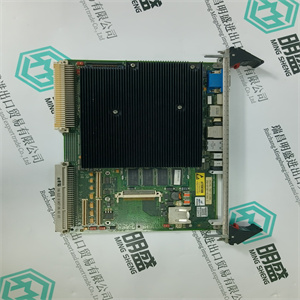
ABB 过程驱动控制器 70PR05B-ES HESG332204R0001
Figure 5. Sensitivity
Accuracy and Accuracy Class
Accuracy class is defined as the maximum deviation, and is expressed as a percentage of the sensitivity at nominal load. This includes linearity deviation, hysteresis and repeatability error.
Linearity Deviation
Linearity deviation is the maximum deviation from a straight line drawn between the output values
at zero load and nominal load. Linearity deviation is related to the sensitivity.
Signal
F Force nom
Figure 6. Linearity Deviation
Hysteresis
Hysteresis is the maximum difference in the output signal at the same load during a cycle from zero
load to nominal load and back to zero load, related to the sensitivity at nominal load. The hysteresis
of a Pressductor transducer is proportional to the load cycle.
Signal
F Force nom
Figure 7. Hysteresis
Pressductor PillowBlock Load Cells, Horizontal Measuring PFTL 101, User Manual
2 Description
12 3BSE009965R0401 en Rev F
Repeatability error
Repeatability error is defined as the maximum deviation between repeated readings under identical
conditions. It is expressed as a percentage of the sensitivity at nominal load.
Compensated temperature range
The temperature drifts of the load cell have been compensated for in certain temperature
ranges. That is the temperature range within which the specified permitted temperature drifts (i.e.
zero point and sensitivity drifts) of the load cell are maintained.
Working temperature range
Working temperature range is the temperature range within which the load cell can operate within
a specified accuracy. The maximum permitted temperature drifts (i.e. zero point and sensitivity
drifts) of the load cell are not necessarily maintained in the whole working temperature range.
Storage temperature range
Storage temperature range is the temperature range within which the load cell can be stored.
Zero point drift with temperature
Zero point drift is defined as the signal change with temperature, related to the sensitivity, when
there is zero load on the load cell.
Sensitivity drift with temperature
Sensitivity drift is defined as the signal change with temperature at nominal load, related to the sensitivity, excluding the zero point drift.
Signal
F Force nom
Sensitivity
drift
Zero
point
drift
Figure 8. Sensitivity drift with temperature
#eflection
#eflection is the total deformation in the measuring direction of the load cell when the load is
increased from zero to the nominal value.
Pressductor PillowBlock Load Cells, Horizontal Measuring PFTL 101, User Manual
2 Description
3BSE009965R0401 en Rev F 13
2.4 Measuring principle of the sensor
The measuring principle of the sensor is based on the Pressductor® technology and the fact that
the permeability of a magnetic material changes under mechanical stress.
The transducer is made up of a stack of specially treated laminates, forming the measuring body.
Primary and secondary windings are wound through four holes in the sensor so that they cross at
right angles.
The primary winding is supplied with an alternating current which creates a magnetic fieKd around
the primary winding. Since the two windings are at right angles to each other, there will be no magnetic fieKd around the secondary winding, as long as there is no load on the sensor.
When the sensor is subjected to a mechanical force in the direction of measurement, the propagation of the magnetic fieKd changes so that it surrounds the secondary winding, inducing an alternating voltage in that winding.
The control unit converts this alternating voltage into a DC voltage proportional to the applied
force. If the measurement force changes direction, the sensor signal changes also polarity.
ABB 过程驱动控制器 70PR05B-ES HESG332204R0001