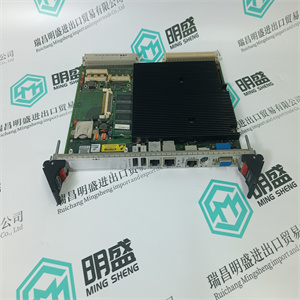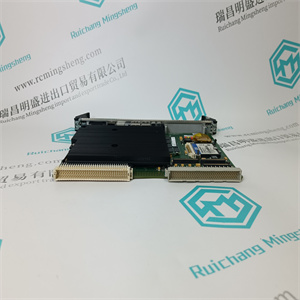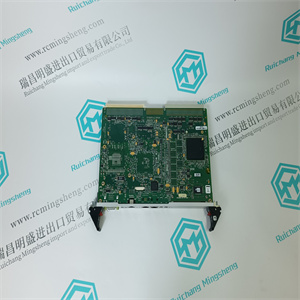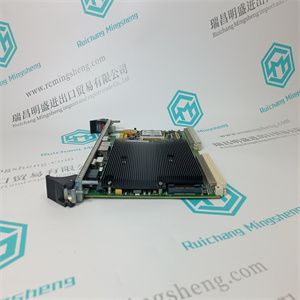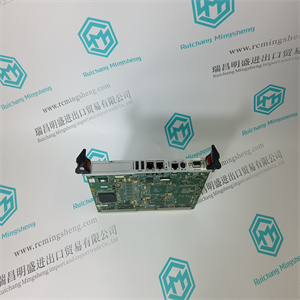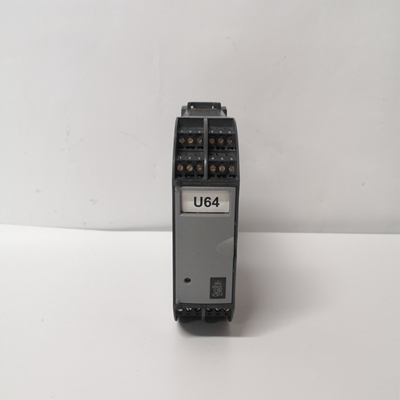



Bailey Infi 90 多功能处理器模块 IMMFP02 IMMFP 02
传感器的测量原理基于Pressductor®技术和以下事实:
磁性材料的磁导率在机械应力下变化。
传感器由一堆经过特殊处理的层压板组成,形成测量体。
一次和二次绕组通过传感器中的四个孔缠绕,以便它们在
直角。
初级绕组被提供交流电,从而在周围形成磁场
初级绕组。由于两个绕组相互成直角,只要传感器上没有负载,二次绕组周围就不会有磁场。
当传感器在测量方向上受到机械力时,磁场的传播发生变化,从而围绕次级绕组,在该绕组中感应交流电压。
控制单元将该交流电压转换成与所施加的电压成比例的直流电压
武力如果测量力改变方向,传感器信号也改变极性。
图9.由于传感器上的机械力,磁场在二次绕组周围的传播
2.5安装布置
选择安装布置时,重要的是要记住将称重传感器放置在
提供足够的测量力(FR)以实现高可能精度的方向。
称重传感器没有特定的正确方向;它位于适合的方向
应用时,应注意螺钉孔的位置。也可以安装称重传感器
辊悬挂在称重传感器下方。
压力导管枕式称重传感器,水平测量PFTL 101,用户手册
2.说明
14 BSE009965R0401 en版本F
称重传感器在两个方向上具有相同的灵敏度,因此可以将称重传感器安装在
简单的方式。
典型的安装布置为水平和倾斜安装。
2.5.1坐标系
为称重传感器定义了坐标系。这在力计算中用于导出力
称重传感器主方向上的组件。
当方向符号R、V和A被识别为力分量F的后缀时
表示相应方向上的力分量。后缀R可以省略,当
测量方向由上下文隐含。
R
五、
五、
R
A A
R=测量方向
V=横向
A=轴向
图10.定义力计算中使用方向的坐标系
2.5.2水平安装
在大多数情况下,水平安装是明显和简单的安装方法。
计算力时,必须使用以下公式:
FR=T×(cosβ-cosα)
FRT=0
FRtot=FR+FRT=T×(cosβ-cosα)
FV
=T×(sinα+sinβ)
FVT=皮重
FVtot=FV
+FVT=T×(sinα+sinβ)+皮重
哪里:
T=腹板/带材张力
FR=测量方向上腹板/带材张力的分力,R
FRT=测量方向上皮重的分力,R
FRtot=测量方向上的总力,R
FV
=横向腹板/带材张力的分力,V
FVT=皮重横向分力,V
FVtot=横向总力,V
皮重=因皮重产生的力
压力导管枕式称重传感器,水平测量PFTL 101,用户手册
2.说明
3BSE009965R0401 en版本F 15
α=#横滚一侧相对于水平面的反射角
β=#横滚另一侧相对于水平面的反射角
T
T
FR
FV
杂草
+α +β
图11.水平安装
2.5.3倾斜安装
“倾斜安装”指称重传感器相对于水平面倾斜的布置
飞机在某些情况下,这是的选择。
计算力时,必须使用以下公式:
FR=T×[cos(β+γ)-cos(α-γ)]
FRT=皮重×sinγ
FRtot=FR+FRT=T×[cos(β+γ)-cos(α-γ)]+(-Tare x sinγ)
FV
=T×[sin(α-γ)+sin(β+γ)]
FVT=-皮重×cosγ
FVtot=FV
+FVT=T×[sin(α-γ)+sin(β+γ)]+皮重×cosγ
哪里:
T=腹板/带材张力
FR=测量方向上腹板/带材张力的分力,R
FRT=测量方向上皮重的分力,R
FRtot=测量方向上的总力,R
FV
=横向腹板/带材张力的分力,V
FVT=皮重横向分力,V
FVtot=横向总力,V
皮重=因皮重产生的力
α=#横滚一侧相对于水平面的反射角
β=#横滚另一侧相对于水平面的反射角
γ=称重传感器安装表面相对于水平面的角度
压力管道
Bailey Infi 90 多功能处理器模块 IMMFP02 IMMFP 02
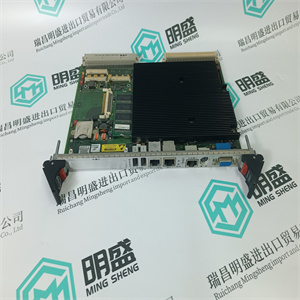
Bailey Infi 90 多功能处理器模块 IMMFP02 IMMFP 02
The measuring principle of the sensor is based on the Pressductor® technology and the fact that
the permeability of a magnetic material changes under mechanical stress.
The transducer is made up of a stack of specially treated laminates, forming the measuring body.
Primary and secondary windings are wound through four holes in the sensor so that they cross at
right angles.
The primary winding is supplied with an alternating current which creates a magnetic fieKd around
the primary winding. Since the two windings are at right angles to each other, there will be no magnetic fieKd around the secondary winding, as long as there is no load on the sensor.
When the sensor is subjected to a mechanical force in the direction of measurement, the propagation of the magnetic fieKd changes so that it surrounds the secondary winding, inducing an alternating voltage in that winding.
The control unit converts this alternating voltage into a DC voltage proportional to the applied
force. If the measurement force changes direction, the sensor signal changes also polarity.
Figure 9. Propagation of magnetic fieKd around secondary winding due to mechanical force on sensor
2.5 Mounting Arrangement
When choosing a mounting arrangement it is important to remember to position the load cell in a
direction that gives sufficient measuring force (FR) to achieve the highest possible accuracy.
The load cell has no particular correct orientation; it is positioned in the orientation best suited for
the application, bearing in mind the positions of the screw holes. The load cell can also be installed
with the roll suspended under the load cell.
Pressductor PillowBlock Load Cells, Horizontal Measuring PFTL 101, User Manual
2 Description
14 3BSE009965R0401 en Rev F
The load cell has the same sensitivity in both directions, so that the load cell can be installed in
the easiest manner.
Typical mounting arrangements are horizontal and inclined mounting.
2.5.1 Coordinate System
A coordinate system is defined for the load cell. This is used in force calculations to derive force
components in the load cell principal directions.
Where direction designations R, V and A are recognized as suffixes for force components, F, this
represents the force component in the respective direction. The suffix R may be omitted, when
measuring direction is implied by the context.
R
V
V
R
A A
R= Measuring direction
V= Transverse direction
A= Axial direction
Figure 10. Coordinate system defining directions used in force calculation
2.5.2 Horizontal Mounting
In the majority of cases horizontal mounting is the most obvious and easiest mounting method.
When calculating the force, the equations below must be used:
FR = T × (cos β - cos α)
FRT = 0
FRtot = FR + FRT = T × (cos β - cos α)
FV
= T × (sin α + sin β)
FVT = Tare
FVtot = FV
+ FVT = T × (sin α + sin β) + Tare
where:
T = Web/strip tension
FR = Force component from web/strip tension in measurement direction, R
FRT = Force component from Tare in measurement direction, R
FRtot = Total force in measurement direction, R
FV
= Force component from web/strip tension in transverse direction, V
FVT = Force component from Tare in transverse direction, V
FVtot = Total force in transverse direction, V
Tare = Force due to tare weight
Pressductor PillowBlock Load Cells, Horizontal Measuring PFTL 101, User Manual
2 Description
3BSE009965R0401 en Rev F 15
α = #eflection angle on one side of the roll relative the horizontal plane
β = #eflection angle on the other side of the roll relative the horizontal plane
T
T
FR
FV
Tare
+α +β
Figure 11. Horizontal Mounting
2.5.3 Inclined Mounting
Inclined mounting means arrangements in which the load cell is inclined relative to the horizontal
plane. In some cases this is the only option.
When calculating the force, the equations below must be used:
FR = T × [cos (β + γ) - cos (α - γ)]
FRT = Tare × sin γ
FRtot = FR + FRT = T × [cos (β + γ) - cos (α - γ)] + (- Tare x sin γ)
FV
= T × [sin (α - γ) + sin (β + γ)]
FVT = - Tare × cos γ
FVtot = FV
+ FVT = T × [sin (α - γ) + sin (β + γ)] + Tare × cos γ
where:
T = Web/strip tension
FR = Force component from web/strip tension in measurement direction, R
FRT = Force component from Tare in measurement direction, R
FRtot = Total force in measurement direction, R
FV
= Force component from web/strip tension in transverse direction, V
FVT = Force component from Tare in transverse direction, V
FVtot = Total force in transverse direction, V
Tare = Force due to tare weight
α = #eflection angle on one side of the roll relative the horizontal plane
β = #eflection angle on the other side of the roll relative the horizontal plane
γ = Angle for load cell mounting surface relative the horizontal plane
Pressduct
Bailey Infi 90 多功能处理器模块 IMMFP02 IMMFP 02