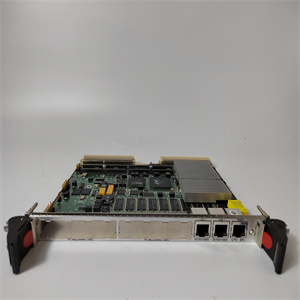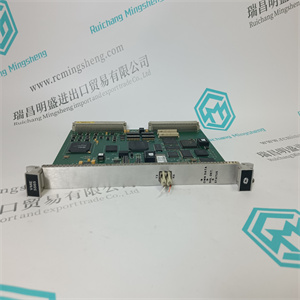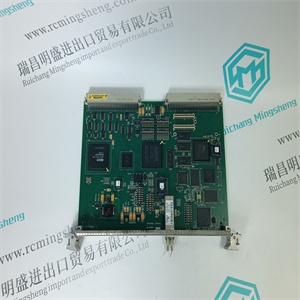

E-00000-411-600-1 DCS过冷裕量计算器组件 ABB
有时需要将称重传感器安装在
由于机械设计限制而倾斜
机器或需要有足够的分力
应用于称重传感器。
倾斜安装在
测量方向并修改力分量
如图所示。
注
计算时,重要的是
设置为具有正确符号的方程式
相对于水平面。
FR=T×[cos() 因为()]
FRtot=FR+FRT=
登记税=皮重×辛
T×[cos() 因为()] + (皮重×辛)
缠绕增益T
FR
-------T
T 余弦 + – 余弦 – = = ---------------------------------------------------------------------
T(张力)缠绕增益FR=
卷绕增益1
余弦 + – 余弦 – = ------------------------------------------------------------
杂草
登记税
FR
T
T
+
杂草
登记税
FR
T
T
+
+
水平面
张力电子PFEA113,用户手册
附录E PFTL 101-称重传感器安装设计
E-6 3BSE029382R0101 C版
E、 6.单测力传感器测量的力计算
在某些情况下,仅在一个传感器上安装一个称重传感器即可测量张力
卷的末尾。然而,应在两端支撑辊。
E、 6.1常见和简单的解决方案
明显和简单的解决方案是水平安装,腹板均匀分布
并以辊为中心。
只要辊在两端支撑,
安装方案、计算力和计算缠绕增益是有效的。
注
单个称重传感器测量的精度在很大程度上取决于:
可以确定力的中心。由于横向应力
分布通常有些不均匀,这不容易做到。称重传感器
然而,将产生稳定和可重复的测量。
图E-2.横向应力分布
张力电子PFEA113,用户手册
第E.6.2节:腹板未位于辊中心时的力计算
3BSE029382R0101版本C E-7
E、 6.2腹板不在辊中心时的力计算
当腹板未居中时,使用以下计算进行水平和倾斜安装
在滚动。
称重传感器上施加的力将与张力之间的距离成比例
中心和称重传感器中心线,见图。
计算程序:
1.水平安装还是倾斜安装?
2.计算FR和FRT,见第E.5节,安装方案,计算力和
计算缠绕增益。
3.使用以下等式:
单称重传感器的FR=
单称重传感器的FRT=
单称重传感器的FRtot=单称重传感器FR+单称重传感器FRT
哪里:
L=称重传感器中心线与相对轴承中心线之间的距离
a=皮重中心和称重传感器中心线之间的距离
b=拉力中心和称重传感器中心线之间的距离
b
一
L
皮重力中心
称重传感器
PFTL 101
张力中心
FR
L b——
L -----------
登记税
洛杉矶——
L -----------
张力电子PFEA113,用户手册
附录E PFTL 101-称重传感器安装设计
E-8 3BSE029382R0101 C版
E、 7.安装称重传感器
以下说明适用于典型的安装布置。允许变化,
只要符合第E.4节“安装要求”的要求。
如果需要使用管状定位销来固定称重传感器的位置,
参见图E-3中的说明。
1.清洁基础和其他安装表面。
2.将下部转接板安装到称重传感器上。
将螺钉拧紧至表E-1中规定的扭矩。
3.将称重传感器和下部适配器板安装到基础上,
但不要完全拧紧螺钉。
4.将上转接板安装到称重传感器上。
将螺钉拧紧至表E-1中规定的扭矩。
5.将轴承箱和辊安装到上适配器板上,
但不要完全拧紧螺钉。
注意安全
在此操作过程中,如果以下情况,可能会使称重传感器过载:
不要太小心,尤其是如果辊很重。临界负荷
细胞自然是PFTL 101A-0.5kN和PFTL 101-2kN。应用
倾斜安装是关键的。
6.调整称重传感器,使其相互平行并与轴向一致
辊的方向。拧紧地脚螺钉,见表E-1。
7.调整辊,使其与称重传感器的纵向成直角。
拧紧上转接板中的螺钉,见表E-1。
表E-1.称重传感器PFTL 101的拧紧力矩
替代类型的螺钉强度
班
类型
E-00000-411-600-1 DCS过冷裕量计算器组件 ABB
E-00000-411-600-1 DCS过冷裕量计算器组件 ABB
Sometimes it is necessary to mount the load cell on an
incline due to mechanical design constraints of the
machine or the need to have a sufficient force component
applied to the load cell.
Inclined mounting adds a component of tare force in the
measuring direction and modifies the force components
as shown.
NOTE
When calculating, it is important that the angles
are set into the equations with the correct signs
in relation to the horizontal plane.
FR = T × [cos() cos()]
FRtot = FR + FRT =
FRT = Tare × sin
T × [cos() cos()] + (Tare × sin )
Wrap gain T
FR
------- T
T cos + – cos – = = ---------------------------------------------------------------------
T (Tension) Wrap gain FR =
Wrap gain 1
cos + – cos – = ------------------------------------------------------------
Tare
FRT
FR
T
T
+
Tare
FRT
FR
T
T
+
+
Horizontal plane
Tension Electronics PFEA113, User Manual
Appendix E PFTL 101 - Designing the Load Cell Installation
E-6 3BSE029382R0101 Rev C
E.6 Force Calculation for Measurement with a Single Load Cell
In some cases, it is sufficient to measure the tension with only a single load cell mounted at one
end of the roll. The roll should nevertheless be supported at both ends.
E.6.1 The Most Common and Simple Solution
The most obvious and simple solution is horizontal mounting with the web evenly distributed
and centered on the roll.
As long as the roll is supported at both ends, the same calculations given in Section E.5,
Mounting Alternatives, Calculating Force and Calculating Wrap Gain are valid.
NOTE
The accuracy of a single load cell measurement is highly dependent on how well
the center of force can be determined. Since the cross-directional stress
distribution generally is somewhat uneven, this is not easily done. The load cell
will, however, produce a stable and repeatable measurement.
Figure E-2. Cross-directional stress distribution
Tension Electronics PFEA113, User Manual
Section E.6.2 Force Calculation when the Web is not Centered on the Roll
3BSE029382R0101 Rev C E-7
E.6.2 Force Calculation when the Web is not Centered on the Roll
Use the calculations below for horizontal and inclined mounting when the web is not centered
on the roll.
The applied force at the load cell will be proportional to the distance between the tension force
center and the load cell centerline, see figure.
Calculation procedure:
1. Horizontal or inclined mounting?
2. Calculate FR and FRT, see Section E.5, Mounting Alternatives, Calculating Force and
Calculating Wrap Gain.
3. Use the following equations:
FR for single load cell =
FRT for single load cell =
FRtot for single load cell = FR for single load cell + FRT for single load cell
where:
L = Distance between load cell centerline and the opposite bearing centerline
a = Distance between tare force center and load cell centerline
b = Distance between tension force center and load cell centerline
b
a
L
Tare force center
Load cell
PFTL 101
Tension force center
FR
L b –
L -----------
FRT
L a –
L -----------
Tension Electronics PFEA113, User Manual
Appendix E PFTL 101 - Designing the Load Cell Installation
E-8 3BSE029382R0101 Rev C
E.7 Mounting the Load Cells
The instructions below apply to a typical mounting arrangement. Variations are allowed,
provided that the requirements of Section E.4, Installation Requirements are complied with.
If it is necessary to use tubular dowel pins to secure the position of the load cell,
see instructions in Figure E-3.
1. Clean the foundation and other mounting surfaces.
2. Fit the lower adapter plate to the load cell.
Tighten the screws to the torque stated in Table E-1.
3. Fit the load cell and the lower adapter plate to the foundation,
but do not fully tighten the screws.
4. Fit the upper adapter plate to the load cell.
Tighten the screws to the torque stated in Table E-1.
5. Fit the bearing housing and the roll to the upper adapter plate,
but do not fully tighten the screws.
CAUTION
During this operation it is possible to over load the load cells if the operation is
done not careful enough, especially if the roll is heavy. The most critical load
cells are naturally the PFTL 101A-0.5 kN and PFTL 101B-2 kN. Applications
with inclined mounting are most critical.
6. Adjust the load cells so that they are in parallel with each other and in line with the axial
direction of the roll. Tighten the foundation screws, see Table E-1.
7. Adjust the roll so that it is at right angles to the longitudinal direction of the load cells.
Tighten the screws in the upper adapter plate, see Table E-1.
Table E-1. Tightening Torques for Load Cell PFTL 101
Alternative Type of screws Strength
class
Type
E-00000-411-600-1 DCS过冷裕量计算器组件 ABB